





Profhilo: a skin-quality injectable for hydration and elasticity
Many people take care of their skin but feel it no longer reflects how they feel. Less elastic, less supple, less radiant — not dramatically aged, but subtly changed. This may result from stress, weight fluctuations, sun exposure, or simply time. For many women, these changes become more noticeable around hormonal transitions, when dryness and early laxity appear together.
Find a verified aesthetic clinic offering Profhilo →
Profhilo has become one of Europe’s most recognised injectables for skin quality. It aims to improve hydration and elasticity without changing facial contours, resulting in a naturally fresher appearance.
What is Profhilo?
Profhilo is an injectable treatment based on stabilised hyaluronic acid (HA). Unlike volumising fillers, it improves the skin’s overall quality by supporting hydration and tissue structure.
Clinically, it is classified as a bioremodelling treatment that helps the skin regain firmness and elasticity through wide, even diffusion of HA within the tissue.
Find a verified aesthetic clinic offering Profhilo →
Profhilo is used under the European MDR framework for medical devices. As with any medical-aesthetic procedure, treatment should follow an individual assessment based on anatomy, skin condition, and medical history.
What Profhilo is not
Not a classic filler: it does not restore volume or reshape contours.
Not a superficial skinbooster: traditional HA skinboosters are injected as multiple microdroplets; Profhilo uses fewer, deeper points for broader diffusion.
Not a lifting procedure: it improves skin quality but does not replace surgical or device-based lifting.
Where Profhilo fits among skin-quality treatments
Injectable treatments for skin quality can be grouped into three main categories:
- Intradermal skinboosters – microinjections of soft HA to improve hydration and fine texture (e.g., Juvéderm Volite, Restylane Skinboosters, Teosyal Redensity I).
- Bioremodelling HA injectables – such as Profhilo, which spread widely to support firmness and elasticity.
- Biostimulatory injectables – such as diluted CaHA, PLLA, or polynucleotides, which stimulate collagen over time.
Profhilo lies between these categories, combining the hydrating effect of HA with gentle tissue remodelling, without adding volume.
What makes Profhilo different
Profhilo is produced using patented technology that combines high- and low-molecular-weight HA into hybrid cooperative complexes.
Stabilisation occurs without chemical cross-linking, enhancing biocompatibility and allowing smooth, natural diffusion in tissue.
Find a verified aesthetic clinic offering Profhilo →
Main benefits:
• global improvement in hydration and elasticity
• support for texture and firmness without added volume
• gradual, natural-looking results
What Profhilo can improve
Clinical studies and real-world use suggest that Profhilo may help with:
• dehydration and dullness
• uneven skin texture
• mild to moderate laxity
• loss of skin elasticity and suppleness
What Profhilo does not treat
• significant volume loss or deep wrinkles
• pigmentation or redness (different therapeutic approach)
A consultation determines whether the main concern is hydration, texture, laxity, pigmentation, or structural ageing.
Treatment protocol
The standard protocol includes:
• two sessions, approximately four weeks apart
• five injection points per facial side to ensure even diffusion
After treatment: mild swelling, redness, or small bumps may occur but usually resolve within a few days.
Results: hydration and comfort improve first, with elasticity and texture changes becoming clearer over the following weeks.
Maintenance sessions may be scheduled periodically.
Safety and medical considerations
Profhilo is well tolerated when performed by a qualified doctor trained in anatomy and injection techniques.
Patients should be informed about possible warning signs (unusual pain, discolouration, persistent swelling) and know how to contact their practitioner.
Low downtime does not mean low responsibility — this remains a medical procedure requiring precision and follow-up.
Who is Profhilo suitable for?
Profhilo is ideal for people who:
• want natural improvement in skin hydration and texture
• notice dryness and mild laxity together
• prefer subtle, gradual results
Less suitable for those seeking volume restoration or visible lifting.
Profhilo price
In Belgium, Profhilo treatments typically start around €270 per session, depending on:
• the area treated (face, neck, décolleté, hands)
• number of syringes required
• practitioner’s experience and follow-up
Since most treatments involve two sessions, patients should consider the full course rather than a single session. Final pricing is confirmed after consultation.
Summary
Profhilo is a bioremodelling HA injectable designed to improve skin hydration, elasticity, and overall quality.
It is suitable for those showing early laxity or dullness who want natural, gradual results.
Success depends on proper indication, precise technique, and realistic expectations — Profhilo helps the skin regain its natural vitality without altering facial features.
Find a verified aesthetic clinic offering Profhilo →
Concerns Profhilo (Skin Booster) can treat
 Accordion linesAccordion lines are fine vertical or fan-shaped lines on the outer cheeks that appear when smiling.
- Ageing handsAgeing hands may show thinner skin, visible veins and tendons, reduced fullness, wrinkles and sun-related spots.
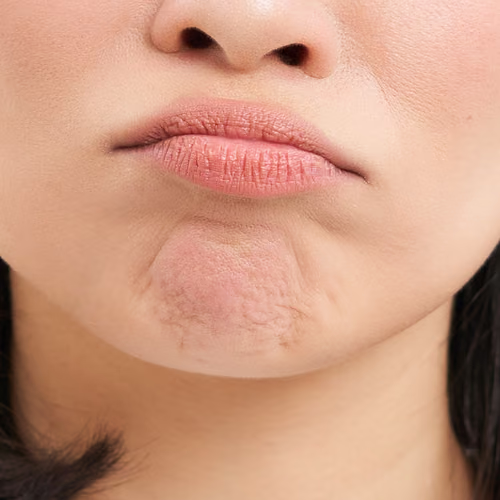 Chin wrinkles and dimplingChin wrinkles may appear as a horizontal crease below the lower lip or as a pebbled, dimpled texture over the chin.
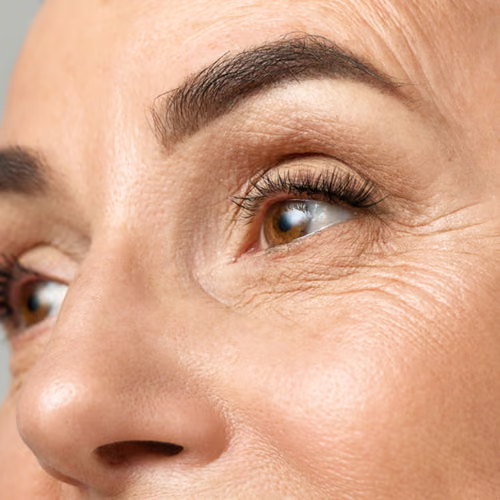 Crow's feetCrow's feet are lines that fan out from the outer corners of the eyes.
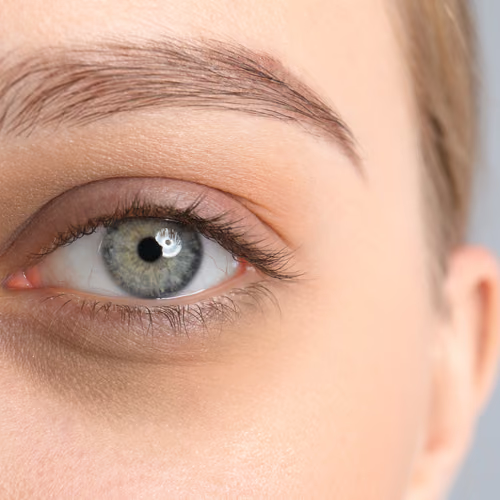 Dark circlesDark circles describe a darker-looking area beneath the eyes.
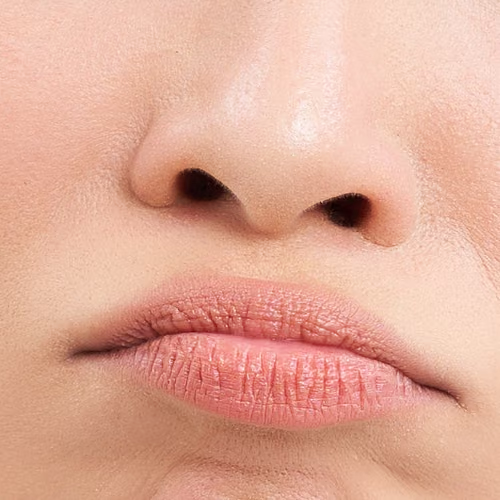 Downturned mouth cornersDownturned mouth corners describe a resting shape in which the oral commissures angle downward.
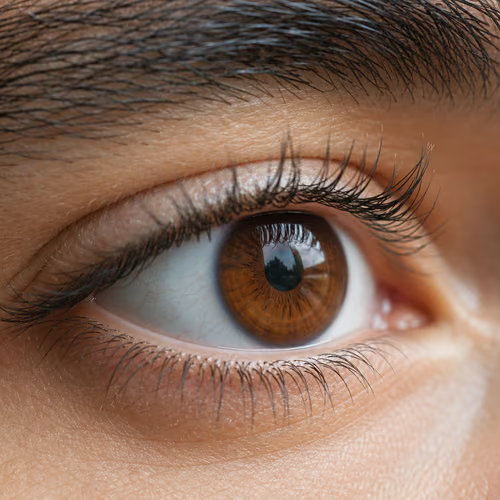 Eye-area concernsEye-area concerns can include dark circles, puffiness, hollows, excess upper-lid skin and fine lines.
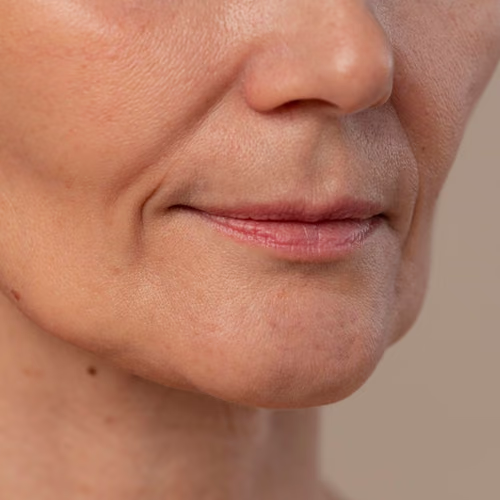 Facial saggingFacial sagging describes visible descent or looseness of facial soft tissues, often around the cheeks, jawline and mouth.
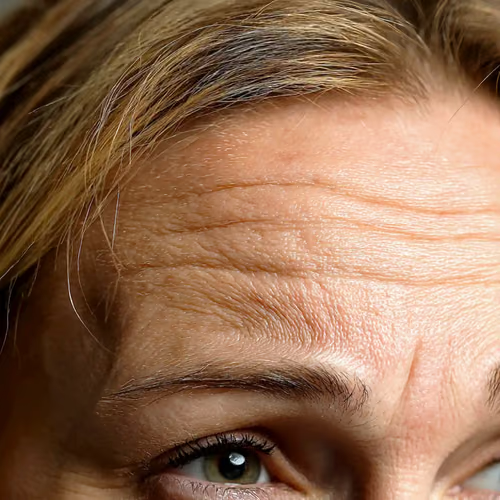 Forehead linesForehead lines are horizontal creases that appear when the frontalis muscle raises the eyebrows.
 Frown linesFrown lines are vertical or slightly angled creases between the eyebrows, sometimes accompanied by a horizontal line across the bridge of the nose.
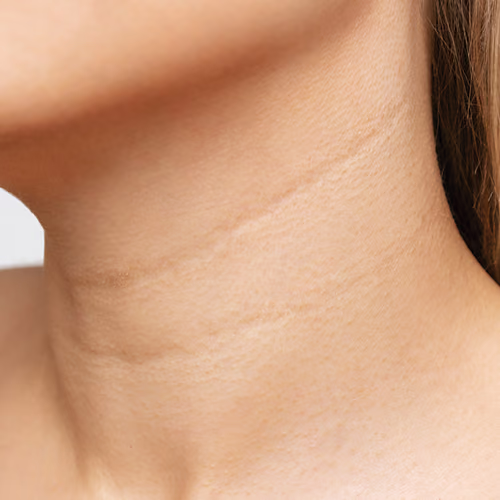 Horizontal neck linesHorizontal neck lines are creases that run across the front or sides of the neck.
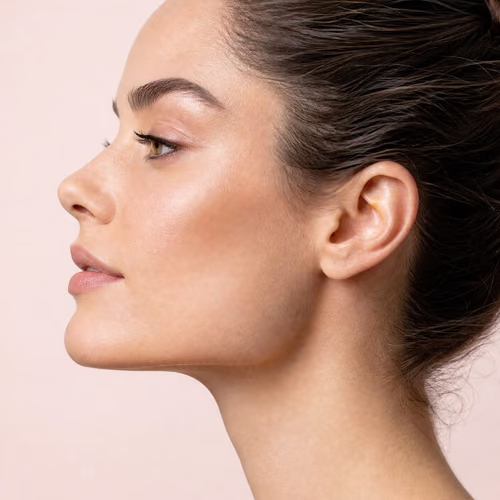 Jawline definitionJawline definition describes how clearly the lower border of the face is seen.
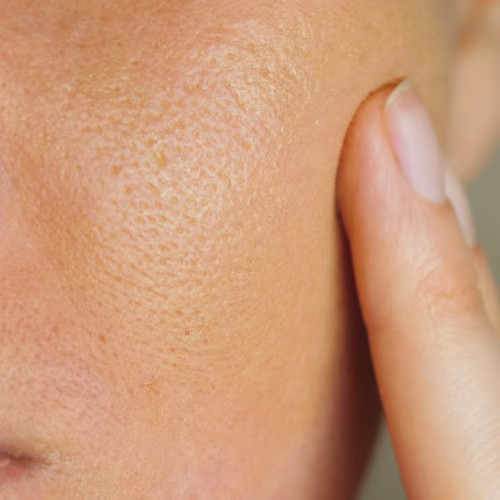 Large poresEnlarged pores are visible openings of hair follicles and their oil glands, most often on the nose and central face.
- Lip volumeLip volume refers to the natural or age-related fullness and projection of the lips.
 Loss of cheek volumeLoss of cheek volume describes reduced fullness or support in the midface.
 Marionette linesMarionette lines are folds extending from the corners of the mouth towards the chin or jaw.
 Nasolabial foldsNasolabial folds are the natural creases running from the sides of the nose towards the corners of the mouth.
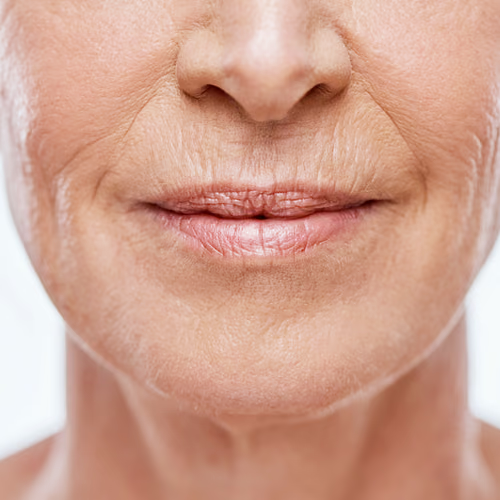 Perioral wrinklesPerioral wrinkles are fine or deeper lines around the mouth, including but not limited to vertical upper-lip lines.
 Sagging neck skinLoose neck skin is skin laxity or folding beneath the chin and along the neck.
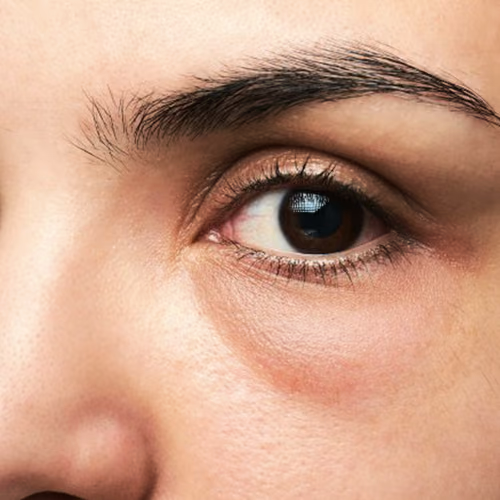 Tear trough hollowsA tear trough is the groove between the lower eyelid and upper cheek.
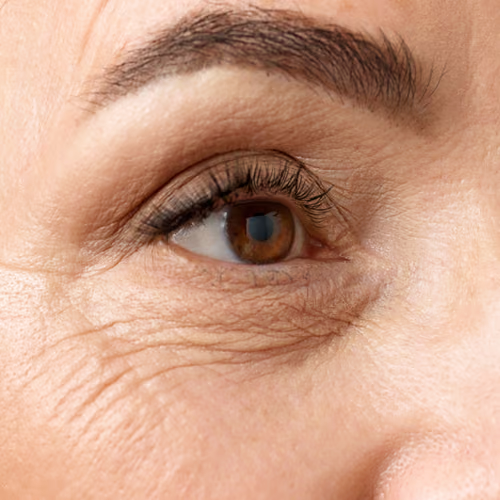 Under-eye wrinklesUnder-eye wrinkles are fine lines in the thin skin beneath the lower eyelids.
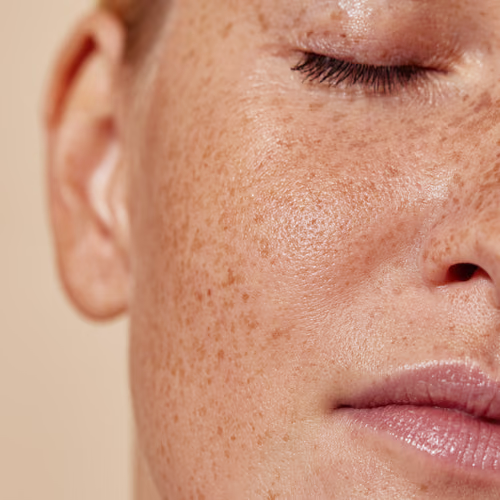 Uneven skin toneUneven skin tone describes areas that look darker, lighter or redder than surrounding skin.
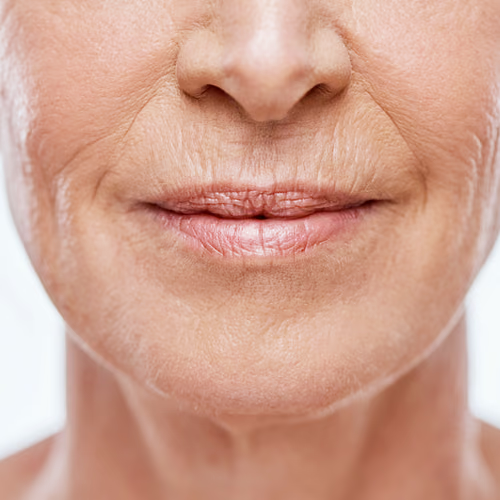 Vertical lip linesVertical lip lines are short creases crossing the lip border or extending into the skin above or below it.
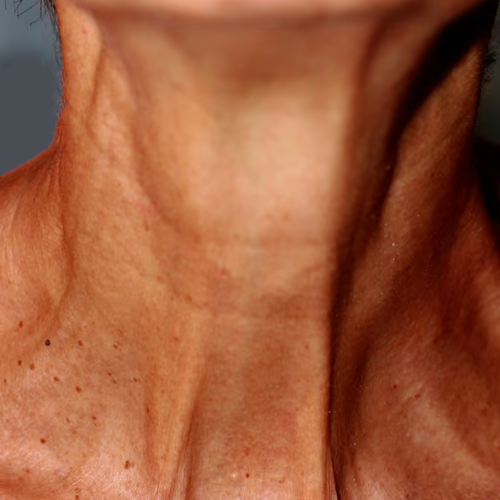 Vertical neck bandsVertical neck bands are cord-like lines that become visible from the jaw towards the collarbone, especially when tensing the neck.
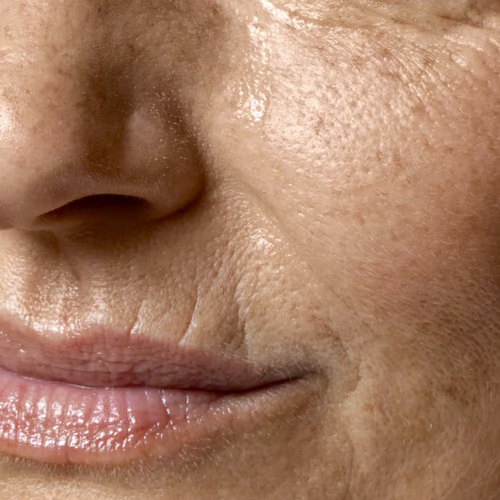 WrinklesWrinkles are fine lines or deeper folds that can develop across the face.
FAQ
What is Profhilo used for?
Profhilo improves skin hydration, elasticity, and texture. It is designed for early signs of laxity and dryness rather than adding facial volume or reshaping contours.
How is Profhilo different from fillers or skinboosters?
Unlike fillers, Profhilo does not add structure or volume. It spreads evenly through the tissue to enhance skin quality. Compared with classic skinboosters, it uses fewer injection points and diffuses more widely.
How many sessions are needed?
The usual protocol includes two sessions about four weeks apart. Some patients repeat treatment every six to twelve months for maintenance.
When will I see results?
Hydration often improves within the first two weeks, while elasticity and texture continue to improve over the following month.
Is there downtime after treatment?
Downtime is minimal. Mild redness, swelling, or small bumps can appear but usually disappear within a few days.
How much does Profhilo cost?
In Belgium, prices typically start around €270 per session. The total cost depends on the area treated and the number of sessions required.
How much does Profhilo cost in the UK?
Published private prices for standard facial Profhilo include about £220–£300 per session. The total depends on the area and number of sessions. Ask whether the quoted price is for one appointment or a course.
Sources and medical references
- Stellavato A, La Noce M, Corsuto L, Pirozzi A, De Rosa M, Schiraldi C. Hybrid cooperative complexes of high- and low-molecular-weight hyaluronan restore human dermal fibroblast viability and function while counteracting inflammation in vitro. BioMed Research International. 2019;2019:1–10. doi:10.1155/2019/8480461
- Sparavigna A, Tenconi B, Gualandri V. Efficacy and tolerance of a new stabilized hybrid cooperative complex of hyaluronic acid in subjects with moderate skin aging: an open multicenter study. Journal of Cosmetic Dermatology. 2019;18(3):689–695. doi:10.1111/jocd.12859
- Papakonstantinou E, Roth M, Karakiulakis G. Hyaluronic acid: a key molecule in skin aging. Dermato-Endocrinology. 2012;4(3):253–258. doi:10.4161/derm.21923
- D’Agostino A, Stellavato A, Busico T, Papa A, Tirino V, Papaccio G, La Gatta A, De Rosa M, Schiraldi C. In vitro analysis of the effects on wound healing of high- and low-molecular-weight hyaluronan mixtures in an in vitro model of human keratinocytes and fibroblasts. BMC Cell Biology. 2015;16:19. doi:10.1186/s12860-015-0066-6
- Trindade de Almeida AR, Kadunc BV, et al. Hyaluronic acid fillers: history, mechanism of action, and classification. Clinical, Cosmetic and Investigational Dermatology. 2020;13:519–532. doi:10.2147/CCID.S249651

 5