
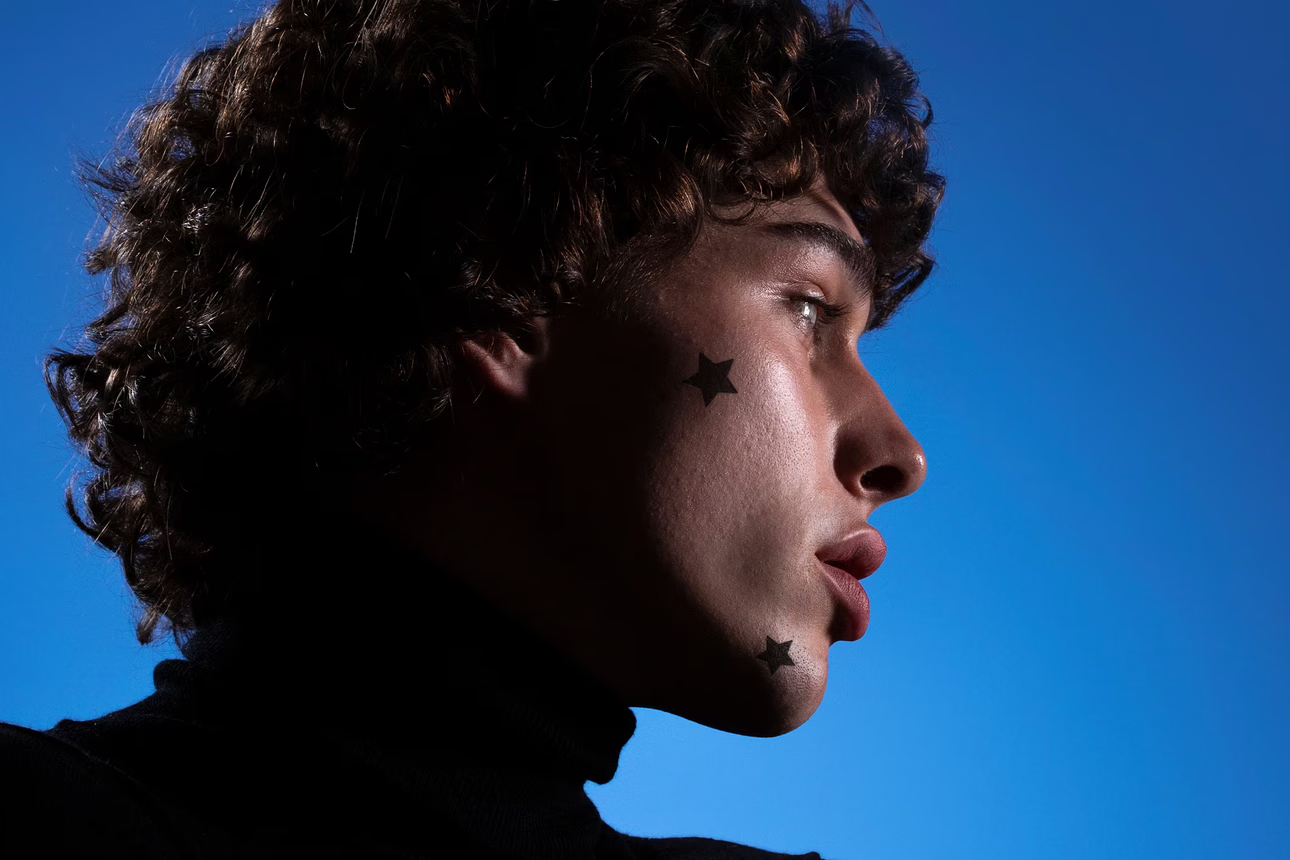




Morpheus8 — Radiofrequency Microneedling for Skin Tightening and Remodeling
Radiofrequency microneedling combines two techniques: micro-needles create tiny channels in the skin, then deliver RF energy directly into the dermis. Unlike surface treatments, this method targets the deeper layers where collagen and elastin are produced.
Morpheus8 is one of the most recognized systems using this technology, but the principle is similar across devices: controlled needle penetration followed by precise dermal heating.
Find a verified aesthetic clinic offering Morpheus8 →
How Morpheus8 RF Microneedling Works (Fractional Radiofrequency Mechanism)
The micro-needles penetrate the epidermis without significant thermal damage to the surface. Once inside the dermis, radiofrequency energy heats the tissue between 40 °C and 70 °C, triggering several biological reactions:
• Immediate collagen contraction around 66 °C, producing a rapid tightening effect
• Progressive neocollagenesis and elastin regeneration over several months
• Fractional coagulation zones affecting about 5 % of the skin surface, allowing faster healing
• Dermal remodeling with activation of younger fibroblasts and reduction of senescent ones
Indications and Candidacy for Morpheus8 RF Microneedling
RF microneedling is suitable for a wide range of skin types because radiofrequency energy is not absorbed by melanin. Clinical studies confirm its safe use on all Fitzpatrick skin types, including darker tones (IV–VI).
You are likely a good candidate if:
• You want to improve skin firmness, fine lines, or uneven texture
• You have atrophic acne scars resistant to other treatments
• You prefer a short recovery (2–5 days)
• You understand that optimal results require several sessions
Find a verified aesthetic clinic offering Morpheus8 →
You may not be a candidate if:
• You have active skin infection, severe acne, or herpes
• You take anticoagulants or have clotting disorders
• You are pregnant or breastfeeding
• You expect immediate transformation
Clinically Validated Treatment Areas
Studies confirm the effectiveness of RF microneedling on multiple areas:
• Face: peri-orbital wrinkles, nasolabial folds, acne scars, enlarged pores, mild to moderate laxity
• Neck: tightening and reduction of fine lines, improved contour (≈30 % reduction documented)
• Body: stretch marks, laxity of abdomen or arms, cellulite (results vary)
Periorbital treatments require lower energy settings (15–30) than the neck (20–40) and should be performed only by experienced practitioners.
What Happens During a Morpheus8 Session
Before treatment: topical anesthesia for 45–60 minutes; nerve blocks possible for higher settings; antiviral prophylaxis if you have a history of herpes.
During treatment: needle depth between 0.5 mm and 4 mm depending on area; warm, prickling sensation; session lasts 20–60 minutes.
Sensation: mild to moderate discomfort; temporary soreness for up to 24 hours in some patients.
Recovery After Morpheus8 RF Microneedling
Days 1–2: redness, mild swelling, and a sunburn-like warmth.
Days 3–7: redness fades; makeup can usually be applied after 3–5 days.
2–4 weeks: skin feels slightly firmer, early subtle improvement.
2–3 months: visible dermal remodeling with smoother texture and tighter skin.
6 months: optimal results; collagen and elastin formation remain active.
Recommended Number of Sessions
• General rejuvenation: 3–4 sessions spaced 4–6 weeks apart
• Acne scars: 3–4 sessions every 3–4 weeks
• Periorbital wrinkles: 3–5 sessions every 2–4 weeks
• Neck laxity: 3–4 sessions every 4 weeks
Results are cumulative — each session triggers new collagen production.
Side Effects and Possible Complications
Common: redness (100 % of patients), mild swelling, transient pain, pinpoint bleeding.
Occasional: post-inflammatory hyperpigmentation (≈5 %), folliculitis, dryness, mild peeling.
Rare: burns (incorrect settings), localized fat loss, nerve injury (extremely rare), scarring (very rare).
FDA note (October 2024): serious adverse events were reported with certain non-compliant RF devices. Risks remain low when the procedure is performed by a qualified physician trained in facial anatomy.
Morpheus8 vs. Other Skin Tightening Technologies
Versus classic microneedling: RF adds controlled thermal injury in the dermis, stimulating more collagen.
Versus fractional CO₂ laser: less epidermal disruption (≈5 % vs. 10–70 %), faster recovery, safer for darker skin.
Versus monopolar RF: energy is delivered directly to the targeted depth for precise, even heating.
How to Optimize Your Morpheus8 Results
• Use SPF 50 daily for at least four weeks before and after treatment.
• Stop retinoids, acids, and exfoliants one week prior.
• Keep the skin hydrated and use barrier-repair creams after treatment.
• Be patient — collagen remodeling takes time and results develop gradually.
Combination Treatments with RF Microneedling
• PRP (platelet-rich plasma): enhances healing and post-treatment comfort.
• Poly-L-lactic acid (PLLA): boosts collagen stimulation.
• Injectables (botulinum toxin, hyaluronic acid): can be combined safely; timing depends on practitioner preference.
Why Choosing a Qualified Practitioner Matters
Results and safety depend directly on practitioner expertise:
• Medical training and strong knowledge of anatomy
• Certified devices (Morpheus8, Secret RF, Scarlet RF, etc.)
• Personalized assessment before each session
• Clear discussion of benefits, risks, and realistic expectations
• Proper post-treatment follow-up and maintenance
Morpheus8 Treatment Prices
In Belgium, prices generally start at €350 per treated area. The total cost depends on the number of zones, protocol, and practitioner’s experience.
Conclusion: A Gradual, Deep Approach to Skin Renewal
Radiofrequency microneedling, with Morpheus8 as its most recognized system, is a clinically validated option for improving texture, firmness, and acne scars.
It stimulates collagen deeply while preserving the epidermis, offering faster recovery than ablative methods.
Results are progressive and natural when performed by a qualified aesthetic professional.
Find a certified aesthetic doctor specialising in skin tightening →
Concerns Morpheus8 (Radiofrequency Microneedling) can treat
- Abdominal fatAbdominal fat may sit beneath the skin or deeper around the internal organs.
- Abdominal scarsAbdominal scars may follow surgery, caesarean birth, injury, burns, infection or piercing.
- Abdominal stretch marksAbdominal stretch marks, or striae, are linear dermal changes that form as skin stretches and remodels.
 Accordion linesAccordion lines are fine vertical or fan-shaped lines on the outer cheeks that appear when smiling.
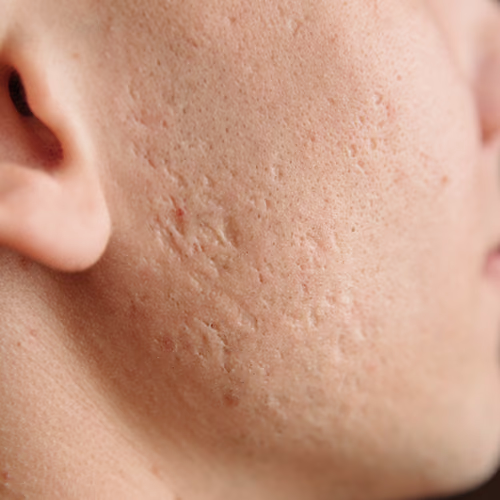 Acne scarsAcne scars are lasting structural changes after acne inflammation.
- Arm fatArm fat describes localised subcutaneous fullness in the upper arms.
- Banana rollA banana roll is a curved fold of fullness just beneath the buttock crease over the upper back thigh.
- Breast scarsBreast scars may follow surgery, biopsy, injury, burns or inflammation.
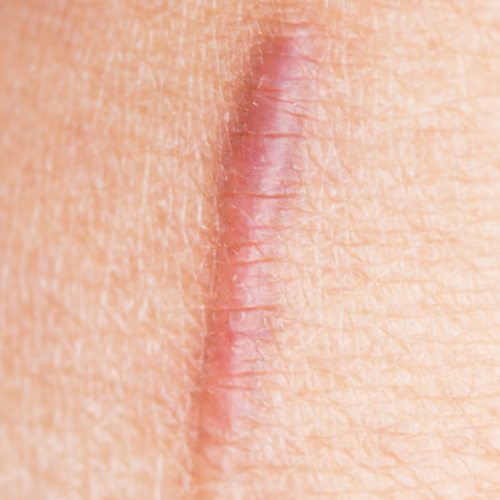 Buttock scarsButtock scars may follow acne, folliculitis, surgery, injections, trauma or infection.
- Cellulite on legs and armsCellulite is a dimpled surface caused by the relationship between superficial fat, fibrous bands and skin.
- Cellulite on the buttocksButtock cellulite is the common dimpled surface produced where fibrous bands tether skin over superficial fat.
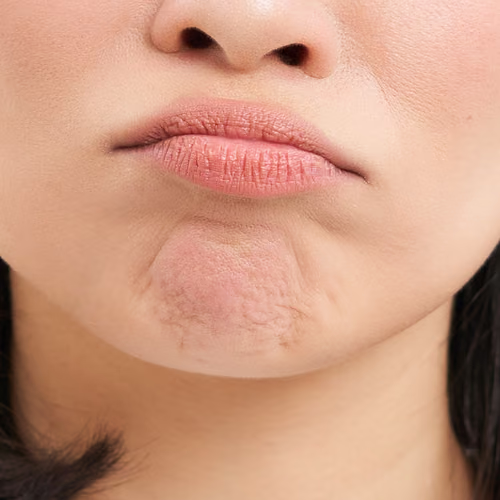 Chin wrinkles and dimplingChin wrinkles may appear as a horizontal crease below the lower lip or as a pebbled, dimpled texture over the chin.
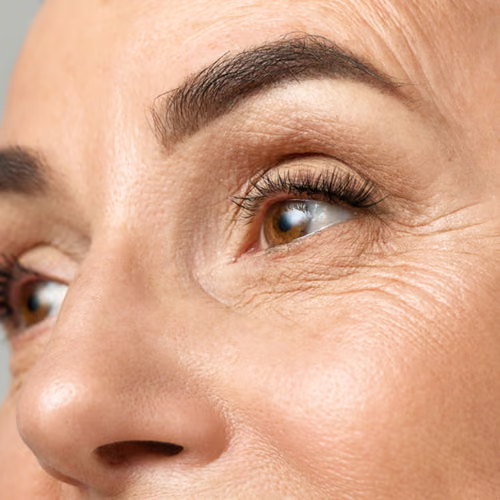 Crow's feetCrow's feet are lines that fan out from the outer corners of the eyes.
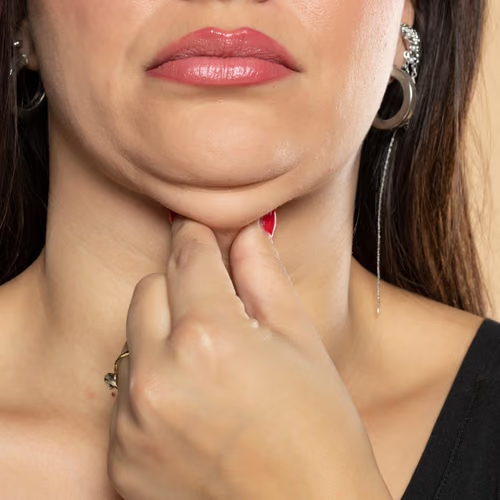 Double chinA double chin is fullness or a fold beneath the chin, also called submental fullness.
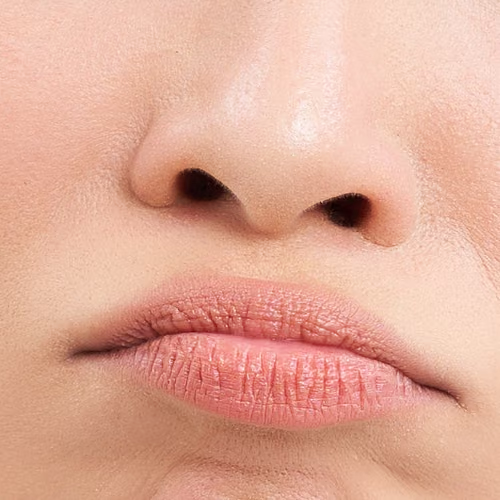 Downturned mouth cornersDownturned mouth corners describe a resting shape in which the oral commissures angle downward.
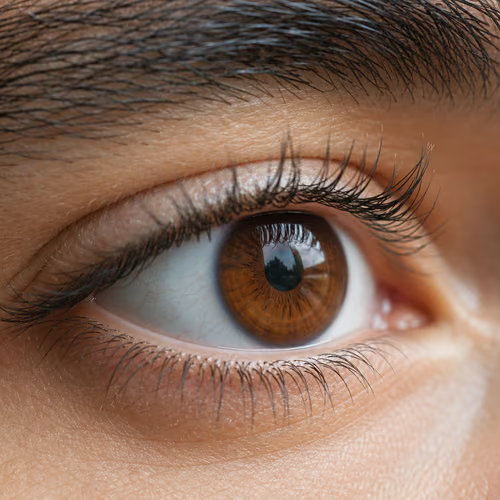 Eye-area concernsEye-area concerns can include dark circles, puffiness, hollows, excess upper-lid skin and fine lines.
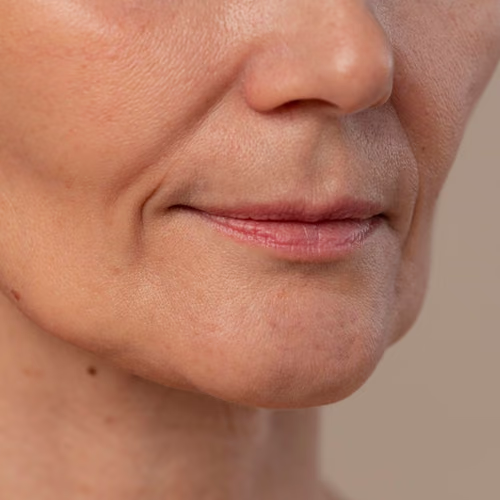 Facial saggingFacial sagging describes visible descent or looseness of facial soft tissues, often around the cheeks, jawline and mouth.
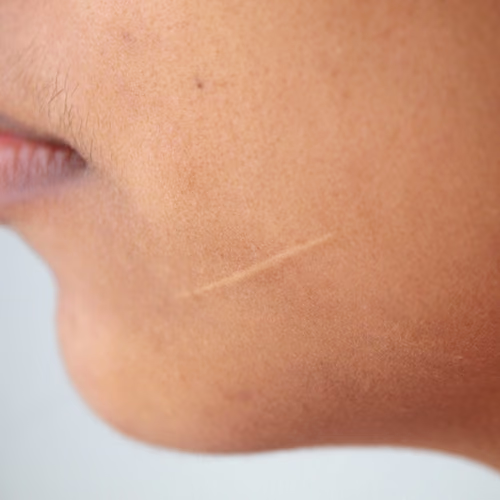 Facial scarsFacial scars form as skin repairs a deeper injury, operation, burn or inflammatory condition.
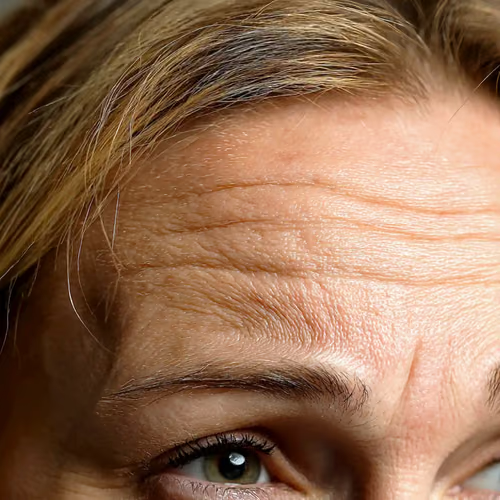 Forehead linesForehead lines are horizontal creases that appear when the frontalis muscle raises the eyebrows.
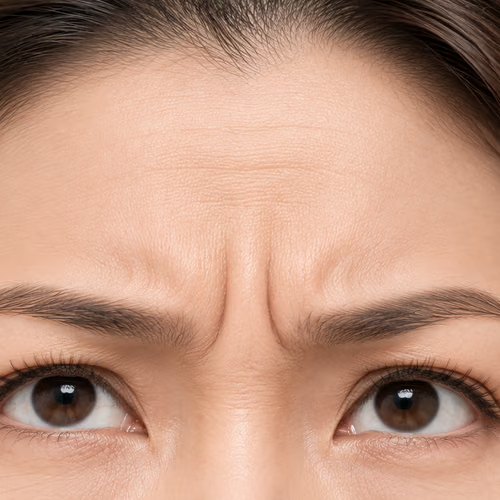 Frown linesFrown lines are vertical or slightly angled creases between the eyebrows, sometimes accompanied by a horizontal line across the bridge of the nose.
- Genital and perineal scarsGenital and perineal scars can follow childbirth, surgery, injury or other tissue damage.
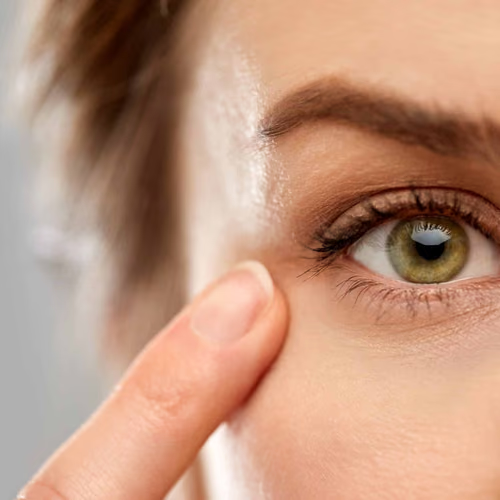 Hooded eyelidsHooded eyelids describe upper-lid skin that folds over the natural crease, sometimes reaching the lash line.
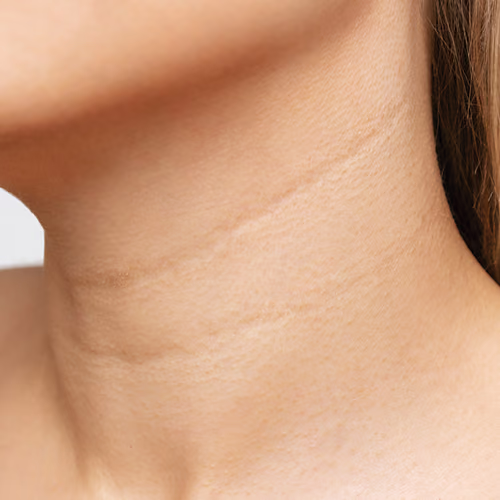 Horizontal neck linesHorizontal neck lines are creases that run across the front or sides of the neck.
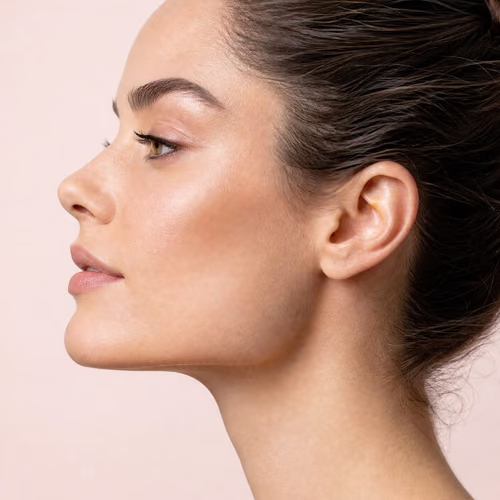 Jawline definitionJawline definition describes how clearly the lower border of the face is seen.
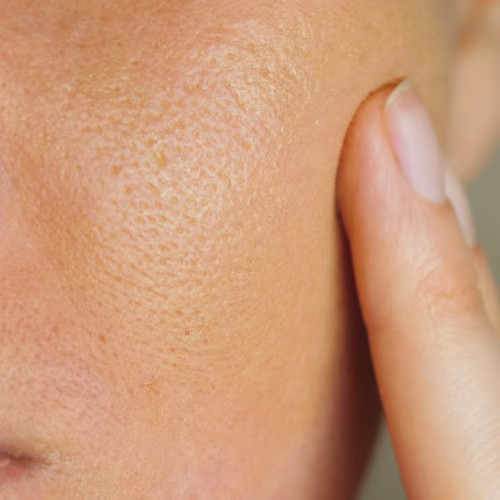 Large poresEnlarged pores are visible openings of hair follicles and their oil glands, most often on the nose and central face.
- Loose abdominal skinLoose abdominal skin no longer closely follows the abdominal contour.
- Loose skin on the legsLoose leg skin may appear as creasing, folds or tissue hanging away from the thigh or knee contour.
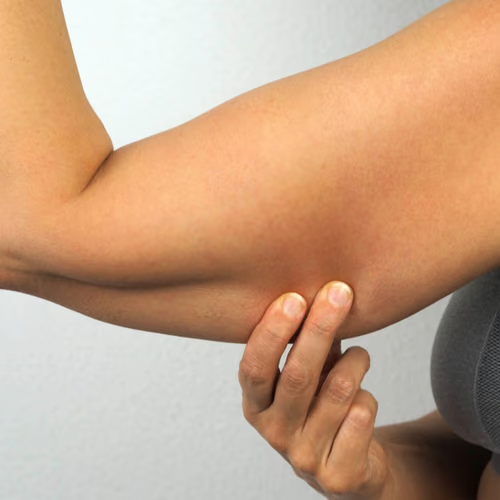 Loose upper-arm skinLoose upper-arm skin hangs or folds away from the underlying contour.
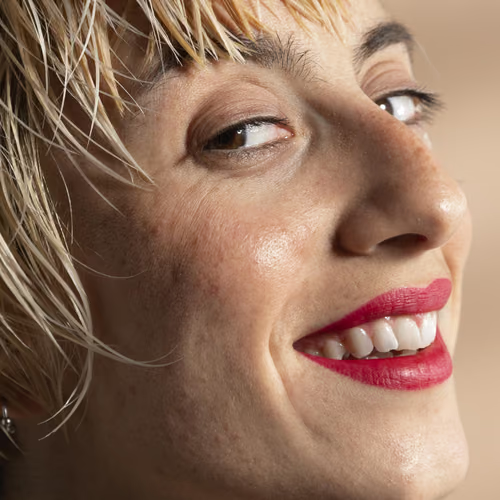 Marionette linesMarionette lines are folds extending from the corners of the mouth towards the chin or jaw.
 Nasolabial foldsNasolabial folds are the natural creases running from the sides of the nose towards the corners of the mouth.
- Perceived vaginal laxityPerceived vaginal laxity is a feeling of reduced vaginal tightness or support.
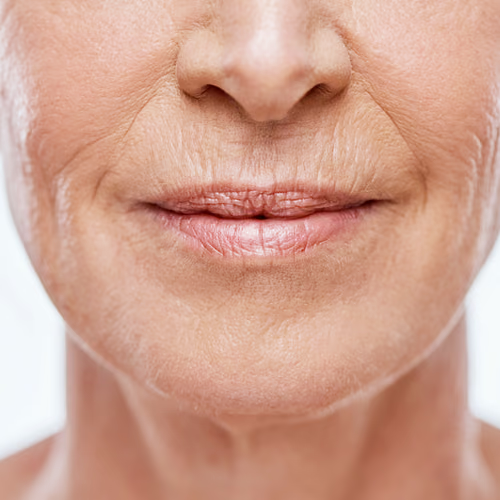 Perioral wrinklesPerioral wrinkles are fine or deeper lines around the mouth, including but not limited to vertical upper-lip lines.
- Sagging buttocksSagging buttocks describe descent or looseness of buttock skin and tissue, often with a lower fold or reduced upper fullness.
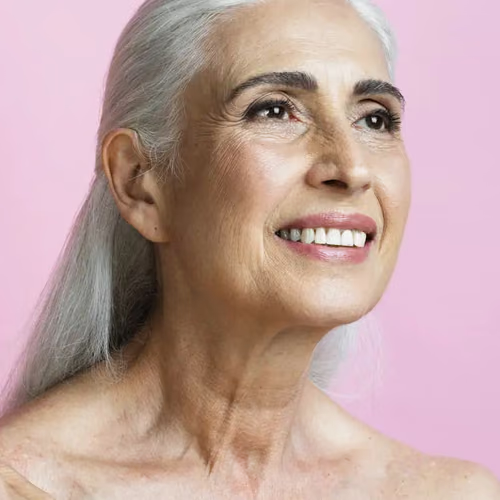 Sagging neck skinLoose neck skin is skin laxity or folding beneath the chin and along the neck.
- Scalp scarsScalp scars may follow injury, burns, surgery or conditions that destroy hair follicles.
- Scars on legs and armsLimb scars may follow injury, surgery, burns, infection, acne or inflammation.
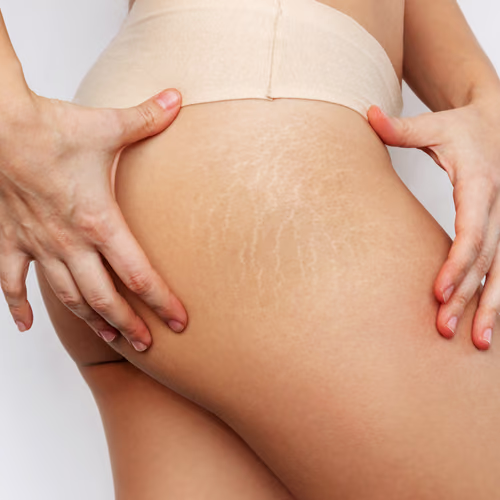 Stretch marks on legs and armsLimb stretch marks are linear dermal changes that often appear during puberty, pregnancy, rapid weight change or muscle growth.
- Thigh fatThigh fat describes localised subcutaneous fullness in the thighs.
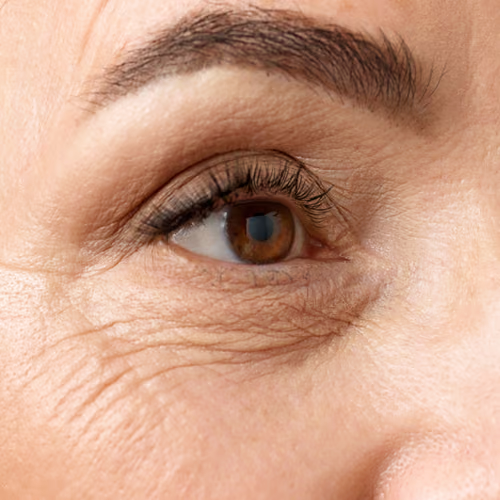 Under-eye wrinklesUnder-eye wrinkles are fine lines in the thin skin beneath the lower eyelids.
- Uneven buttock contourUneven buttock contour includes asymmetry, dents, bulges or different shape between sides.
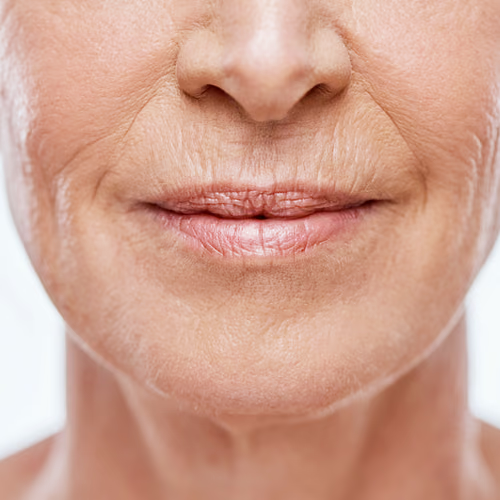 Vertical lip linesVertical lip lines are short creases crossing the lip border or extending into the skin above or below it.
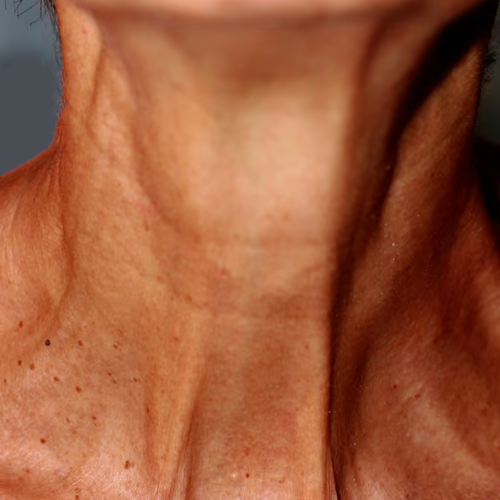 Vertical neck bandsVertical neck bands are cord-like lines that become visible from the jaw towards the collarbone, especially when tensing the neck.
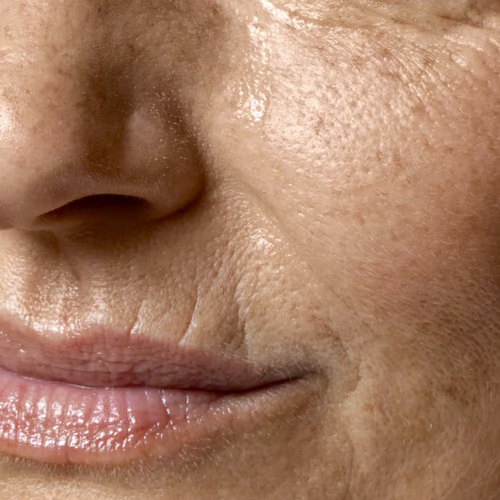 WrinklesWrinkles are fine lines or deeper folds that can develop across the face.
FAQ
What is Morpheus8 RF microneedling?
Morpheus8 combines microneedling and radiofrequency energy to stimulate collagen and elastin in the deeper skin layers. It helps tighten, smooth, and refine skin texture without damaging the surface.
How is it different from classic microneedling?
Traditional microneedling creates controlled micro-injuries, while Morpheus8 adds thermal energy through radiofrequency, enhancing collagen remodeling and firmness.
Which areas can be treated?
Commonly treated areas include the face, neck, décolleté, abdomen, arms, and knees. Delicate areas like the eye contour can be treated with adapted energy levels.
How many sessions are needed?
Typically three to four sessions spaced four to six weeks apart achieve optimal results. Some patients may need additional sessions for acne scars or deep wrinkles.
What is the downtime?
Mild redness and swelling last one to three days. Most people return to normal activities the next day.
Does the treatment hurt?
Topical anesthesia is applied before treatment. Discomfort is minimal and temporary.
What are the possible side effects?
Temporary redness, swelling, and dryness are common. Rare risks include hyperpigmentation or small burns if parameters are inappropriate.
At what age can someone start Morpheus8?
It is suitable for adults from around age 30 who notice mild to moderate skin laxity or textural changes.
How much does Morpheus8 cost?
In Belgium, prices usually start around €350 per treated area, depending on the number of sessions and areas involved.
How much does Morpheus8 cost in the UK?
Published private prices include £495 for a full-face session excluding the eye area and £650–£690 for face and neck at two clinics. The total depends on the areas treated and the number of sessions. Check exactly what each quote includes.
Sources and medical references
- Baek G, Kim MH, Jue MS. Efficacy of microneedle radiofrequency therapy in the treatment of senile purpura: a prospective study. Skin Res Technol. 2022 Nov;28(6):856-864. doi:10.1111/srt.13225.
- Tan MG, Jo CE, Chapas AM, Khetarpal S, Dover JS. Radiofrequency microneedling: a comprehensive and critical review. Dermatol Surg. 2021 Jun;47(6):755-761.
- Benítez-Roig V, Trelles MA. Procedure and results on lower face and neck rejuvenation using a temperature-controlled bipolar fractional radiofrequency microneedling device. Lasers Surg Med. 2022 Jul;54(5):639-647. doi:10.1002/lsm.23517.
- Nguyen L, Blessmann M, Schneider SW, Herberger K. Radiofrequency microneedling for skin tightening of the lower face, jawline, and neck region. Dermatol Surg. 2022 Dec;48(12):1299-1305. doi:10.1097/DSS.0000000000003607.
- Kwon SH, Choi JY, Ahn GY, et al. The efficacy and safety of microneedle monopolar radiofrequency for the treatment of periorbital wrinkles. J Dermatolog Treat. 2021 Jun;32(4):460-464. doi:10.1080/09546634.2019.1662880.

 5