





What are cheek filler injections?
Hyaluronic acid cheek fillers are non-surgical treatments designed to restore lost volume in the midface, enhance the cheekbones, and improve facial harmony.
By lifting and redefining the cheek area, they help soften nasolabial folds and create a refreshed, naturally sculpted appearance — without surgery or scars.
Clinical research shows that cheek augmentation with hyaluronic acid fillers is safe, effective, and well-tolerated, with a high level of patient satisfaction.
Hyaluronic Acid Cheek Fillers: Restore Facial Volume and Natural Glow!
Find a certified doctor specialized in hyaluronic acid cheek injections →
Who is this treatment for?
Cheek filler treatment is ideal for anyone who wants to:
- Restore midface volume lost due to aging or weight loss;
- Lift sagging cheeks for a subtle rejuvenation effect;
- Soften deep folds such as the nasolabial lines;
- Enhance facial structure and balance proportions;
- Rejuvenate the face without undergoing surgery.
It’s suitable for both younger patients seeking more definition and mature patients looking to regain firmness and contour.
Anatomy, technique, and filler selection
Understanding facial anatomy
The cheek region (malar area) is rich in vessels and nerves, which requires precision and anatomical expertise.
Proper knowledge of the midface structure is key to achieving natural results while minimizing risks.
Injection technique
- Deep injections near the zygomatic bone for structural support;
- Superficial passes for shaping and soft transitions;
- Frequent use of cannulas to reduce bruising and swelling;
- Gradual injections in small volumes for smooth, controlled lifting.
Modern guidelines recommend a layered and conservative approach to preserve symmetry and facial expression.
Filler choice
For the cheeks, doctors use medium- to high-density hyaluronic acid gels that offer firmness, projection, and durability.
These fillers are cohesive enough to hold shape while blending naturally into the surrounding tissues.
Results and duration
Results are immediately visible after the procedure: cheeks appear fuller, the face looks lifted, and contours become more defined.
The final outcome refines over the next few days as minor swelling fades.
The average duration of results is 9 to 18 months, depending on the filler, injection technique, and individual metabolism.
A light yearly touch-up helps maintain a balanced and natural appearance.
Safety, side effects, and precautions
When performed by a qualified medical professional, cheek fillers are safe and predictable.
Common short-term reactions
- Mild redness or tenderness at the injection site;
- Temporary swelling or bruising;
- Slight asymmetry that resolves naturally.
Rare complications
- Persistent cheek swelling (malar edema);
- Filler migration or small nodules;
- Superficial irregularities;
- Vascular occlusion (very rare).
To reduce risk, practitioners inject slowly, in the correct anatomical plane, and always have hyaluronidase available to dissolve the filler if needed.
Typical treatment protocol
- Facial assessment (volume loss, symmetry, bone structure);
- Mapping of precise injection points;
- Deep injections for lift and structure;
- Superficial passes for soft shaping;
- Gentle massage to smooth the product;
- Optional follow-up after 2–3 weeks for adjustments.
Comparison: cheeks vs other filler areas
Cheeks / midface
Recommended filler → Dense, cohesive gel
Main goal → Restore midface volume, support facial structure, refine contour
Lips
Recommended filler → Soft, elastic, low-hydrophilic gel
Main goal → Add volume and definition while maintaining mobility
Chin
Recommended filler → Medium- to high-density volumizing filler
Main goal → Project or elongate the chin, improve facial profile
Jawline / lower face
Recommended filler → Firm, structured filler
Main goal → Define the jawline and correct mild sagging
Cheek filler cost
The price depends on the filler brand and quantity used.
On average in Belgium, cheek filler treatments cost €450–750 per session.
Your doctor will provide a personalized plan and quote based on your goals and anatomy.
Who can perform cheek filler injections?
In Belgium, only licensed medical doctors are authorized to perform hyaluronic acid injections.
Beauticians, nurses, or non-medical staff are not allowed to inject fillers, even under supervision.
This ensures patient safety, proper technique, and qualified handling of any rare complications.
Summary and recommendations
Cheek fillers with hyaluronic acid are one of the most effective ways to lift, contour, and rejuvenate the face without surgery.
The key to success lies in precision, restraint, and medical expertise.
A good result doesn’t change your face — it enhances its light and natural balance.
Ready to refresh your facial contours?
Find a verified clinic offering cheek filler treatments →
Concerns Cheek Fillers can treat
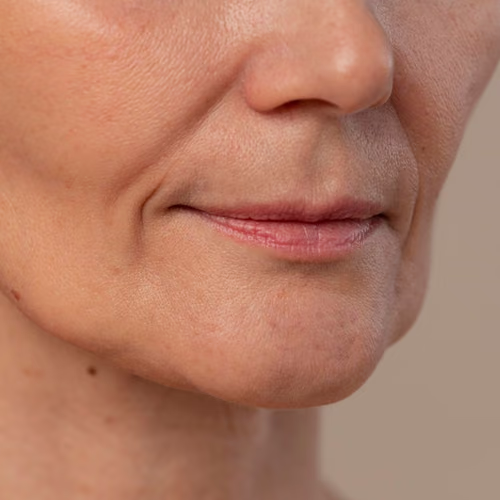 Facial saggingFacial sagging describes visible descent or looseness of facial soft tissues, often around the cheeks, jawline and mouth.
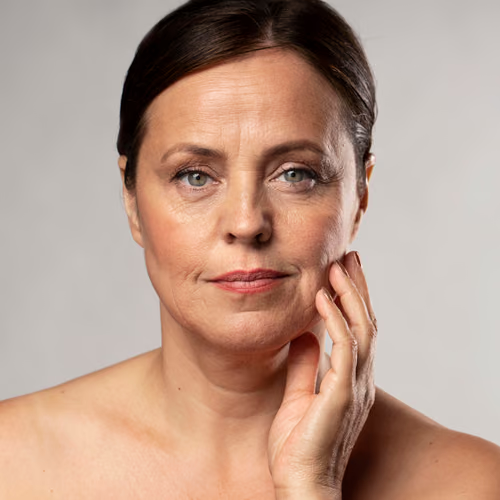 Loss of cheek volumeLoss of cheek volume describes reduced fullness or support in the midface.
 Nasolabial foldsNasolabial folds are the natural creases running from the sides of the nose towards the corners of the mouth.
FAQ
What are cheek fillers?
A non-surgical treatment using hyaluronic acid gel to restore cheek volume, enhance facial structure, and soften deep lines.
Who is the treatment suitable for?
Anyone who notices a loss of midface volume, sagging, or a tired facial appearance and wants a lift without surgery.
How much product is typically needed?
Usually between 1 and 3 ml, depending on your anatomy and desired result.
Is the procedure painful?
Discomfort is minimal. Most fillers contain lidocaine, and numbing cream can be used for added comfort.
When will I see results?
Immediately after the procedure. The final result appears after a few days, once swelling has subsided.
How long do results last?
Between 9 and 18 months, depending on the product, technique, and metabolism.
Is it safe?
Yes — when performed by an experienced doctor. Serious complications are rare and well-documented.
What are the possible risks?
Prolonged swelling, product migration, small nodules, or — in rare cases — vascular complications.
Can cheek fillers be combined with other treatments?
Yes. They are often combined with chin, jawline, or under-eye fillers for a more balanced, harmonious result.
How much does cheek filler treatment cost?
In Belgium, between €450 and €750, depending on the brand and amount of filler used.
How much do cheek fillers cost in the UK?
Published private prices start at around £290 for cheek filler at one clinic. Another lists £350 for 1 mL and £550 for 2 mL. Ask whether the quote covers both cheeks and how much filler is included.
Who can inject cheek fillers?
In Belgium, only qualified medical doctors are legally allowed to perform hyaluronic acid injections.
Who can inject cheek fillers in the UK?
There is no single UK-wide rule limiting adult cheek filler injections to doctors. Choose a registered healthcare professional trained in cheek injections and ask how they would recognise and manage a complication such as a blocked blood vessel.
Sources and medical references
- Jones D, Palm M, Cox SE, McDermott M, Sartor M, Chawla S. Safety and Effectiveness of Hyaluronic Acid Filler, VYC-20L, via Cannula for Cheek Augmentation: A Randomized, Single-Blind, Controlled Study. Dermatol Surg. 2021 Dec 1;47(12):1590-1594. doi: 10.1097/DSS.0000000000003246. PMID: 34743118; PMCID: PMC8612896.
- Hong GW, Hu H, Chang K, Park Y, Lee KWA, Chan LKW, Yi KH. Review of the Adverse Effects Associated with Dermal Filler Treatments: Part I Nodules, Granuloma, and Migration. Diagnostics (Basel). 2024 Jul 30;14(15):1640. doi: 10.3390/diagnostics14151640. PMID: 39125515; PMCID: PMC11311355.
- Trévidic P, Kaufman-Janette J, Weinkle S, Wu R, Dhillon B, Antunes S, Macé E, Maffert P. Injection Guidelines for Treating Midface Volume Deficiency With Hyaluronic Acid Fillers: The ATP Approach (Anatomy, Techniques, Products). Aesthet Surg J. 2022 Aug 1;42(8):920-934. doi: 10.1093/asj/sjac007. PMID: 35039828; PMCID: PMC9373948.
- Funt DK. Avoiding malar edema during midface/cheek augmentation with dermal fillers. J Clin Aesthet Dermatol. 2011 Dec;4(12):32-6. PMID: 22191006; PMCID: PMC3244361.
- Complications of Hyaluronic Acid Fillers (EyeWiki) https://eyewiki.org/Complications_of_Hyaluronic_Acid_Fillers
- NHS. Cosmetic procedures: choosing who will do your procedure. https://www.nhs.uk/tests-and-treatments/cosmetic-procedures/advice/choosing-who-will-do-your-procedure/
- Department of Health and Social Care. Restrictions on the performance of high-risk cosmetic and wellbeing procedures in England (consultation). https://www.gov.uk/government/consultations/restrictions-on-the-performance-of-high-risk-cosmetic-and-wellbeing-procedures-in-england
- legislation.gov.uk. Act of the Scottish Parliament 2026 asp 13, section 24. https://www.legislation.gov.uk/asp/2026/13/section/24/2026-07-22

 5