



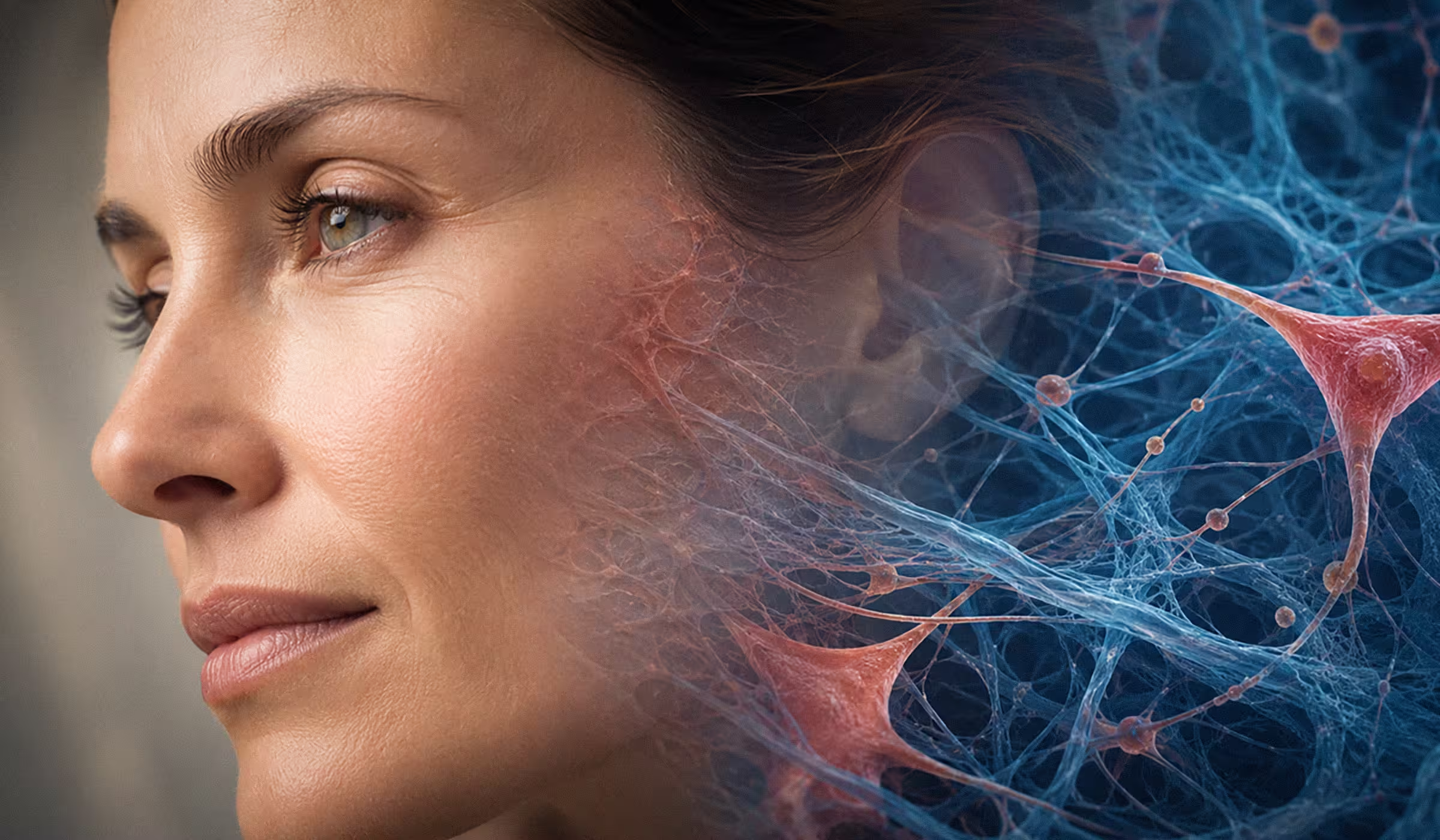



The term has been everywhere for about a year. It sits on clinic websites between "regenerative" and "biohacking," and it has the unmistakable shape of a marketing wrapper retrofitted around treatments that already existed. Most of what gets called longevity aesthetics is just anti-aging with a new dress.
But something underneath has actually shifted. It is worth separating the two.
The reframe
The old proposition was simple: aging produces visible decline, and aesthetic medicine fights it. Wrinkles get filled, laxity gets lifted, lines get frozen. The mental model is mechanical, almost cosmetic in the dictionary sense — you cover what time exposes.
The new proposition starts from a different place. Aging, as the field of geroscience has spent two decades arguing, is not a clock. It is a set of cellular and molecular processes that can, in principle, be measured, slowed, and in some cases reversed. In 2023, a landmark paper updated the framework to twelve hallmarks of aging — including genomic instability, telomere attrition, mitochondrial dysfunction, cellular senescence, chronic inflammation, and stem cell exhaustion.¹ This is the shared vocabulary of longevity research.
Longevity aesthetics is the bet that aesthetic medicine can stop being downstream of these processes and start being upstream of them — that the work of a clinic isn't only to soften the visible signs of aging but to intervene at the level of the biology producing them. A recent narrative review in the Journal of Cosmetic Dermatology describes this shift in plain terms: from reactive, surface-level aesthetic treatments to science-driven strategies that restore skin integrity at a cellular level.²
Whether any given clinic actually does that, or just says it does, is a separate question.
Why the skin is the right place to test the idea
Skin is, conveniently, the organ where the hallmarks of aging are most accessible. You can see them. You can biopsy them. You can intervene on them topically and intradermally without surgery.
The mechanism that links the visible to the cellular is now well-mapped. Dermal fibroblasts — the cells responsible for synthesizing collagen, elastin, and the rest of the extracellular matrix — accumulate damage from UV, oxidative stress, and chronic low-grade inflammation. A growing fraction enter cellular senescence: an irreversible exit from the cell cycle in which the cell stops dividing but doesn't die. Instead, it sits there secreting what's known as the senescence-associated secretory phenotype, or SASP — a cocktail of pro-inflammatory cytokines and matrix-degrading enzymes that damage the surrounding tissue and push neighboring cells toward the same fate.³
The visible consequences are what we already recognize as aged skin. Collagen and elastin networks fragment. The dermal-epidermal junction flattens. Pigmentation becomes irregular. The skin loses the bounce that comes from a well-ordered extracellular matrix. This isn't a metaphor about cellular damage causing wrinkles. It is, mechanistically, the chain of events.⁴
That is the bridge longevity aesthetics is trying to walk across: if senescent fibroblasts drive the visible features of aged skin, then anything that clears them, suppresses their SASP, or restores their function isn't cosmetic in the old sense. It is biological.
The exposome — why two people the same age don't look the same age
The other piece of the reframe is that aging is not uniform. Two people can be the same age on paper and have very different skin, because their cumulative environmental exposure is different.
This is what dermatology calls the exposome: the total effect of factors such as sun exposure, pollution, smoking, nutrition, stress, sleep, and even cosmetic products on the skin.⁵ These exposures are not vague "lifestyle" ideas. Many have been linked to measurable biological changes in the skin, including oxidative stress, inflammation, epigenetic changes, and telomere shortening.⁶
The practical consequence is simple: every aesthetic treatment has a denominator. You can stimulate collagen production, but if the patient is still accumulating photodamage at the same rate, the treatment is working against an ongoing biological pressure.
Longevity aesthetics, in its more honest form, brings the exposome into the treatment plan — not as moralizing lifestyle advice, but because sunscreen, sleep, smoking, nutrition, and inflammation are part of the same biological system as the injectable.
This is also where the field gets uncomfortable. Clinics are better at selling syringes than they are at having conversations about smoking.
The question patients should actually be asking
For patients, the question is not "which treatment is the most advanced?" It is: what is actually changing in my skin, how strong is the evidence for this intervention, and why is it being recommended for me specifically?
The rest of this article is structured around that question.
What's actually on the menu
Three broad categories of intervention sit under the longevity aesthetics label, plus one that deserves its own paragraph. They differ in mechanism and in how strong the evidence is.
Replacement. Conventional hyaluronic acid fillers — the Juvederm, Restylane, Teosyal, and Belotero families — occupy a volume deficit. The mechanism is mechanical. They are useful, predictable, and largely outside the longevity frame, except inasmuch as well-placed structural support reduces the cascade of compensatory tissue changes that aging triggers. Skin boosters in this category (Profhilo, Restylane Skinboosters, Volite) sit slightly closer to the longevity frame because they hydrate and modestly stimulate the dermis rather than purely filling, but they remain HA-based and resorb over months.
Biostimulation. These are the products that genuinely fit the "longevity" idea, because they don't just fill — they recruit your own cells to rebuild collagen. Three molecules dominate the category, each sold under specific brand names. Poly-L-lactic acid, or PLLA, is the active ingredient in Sculptra. Calcium hydroxyapatite, or CaHA, is Radiesse. Polycaprolactone, or PCL, is Ellansé. A hybrid product, HArmonyCa, combines CaHA with hyaluronic acid in a single syringe — giving both immediate lift and longer-term collagen stimulation. The mechanisms differ. Sculptra works by triggering a controlled inflammatory response that signals your own fibroblasts to lay down new collagen, slowly, over three to six months — which is why honest practitioners space the sessions and refuse to promise anything visible at the first appointment. Radiesse adds immediate volume and stimulates new collagen more quickly, with histological changes visible within two to four weeks. Ellansé forms a long-degrading scaffold that sustains collagen production over many months, typically the longest-lasting of the three. The systematic review evidence is robust for efficacy and safety;⁷ it is thinner for the precise long-term molecular consequences of repeated treatment.
Polynucleotide injectables. A separate category sits between fillers and biostimulators. Polynucleotides (PN) and polydeoxyribonucleotides (PDRN) are fragments of purified DNA, usually derived from salmon or trout, injected into the dermis to activate adenosine A2A receptors on fibroblasts. The main products in European clinics are Nucleofill, Plinest, and Rejuran. They are marketed as "regenerative" treatments and they fit the longevity vocabulary well — the pharmaceutical biology is real, the molecule has been an Italian medication for wound healing since 1994, and the injectable evidence is at least cleaner than for exosomes. The largest controlled trial, however, found no statistically significant difference between a polynucleotide injectable and hyaluronic acid.⁸ We've published a full evidence review of salmon DNA in aesthetics covering each product, the regulatory status, and why topical PDRN serums almost certainly cannot deliver a 132,000-dalton molecule through an intact skin barrier. The short version: injectable PDRN has some real signal; topical PDRN serums do not.
Cellular signaling. This is where the longevity aesthetics frame is doing its newest, and most marketed, work. Exosomes — small extracellular vesicles (30–150 nm) carrying proteins, lipids, and non-coding RNAs — have become the field's most loudly advertised category. The preclinical literature is genuinely interesting. The clinical evidence is not. We've already published a long-form review of where the exosome evidence actually stands — twelve clinical studies total across all aesthetic indications, the largest facial study without any control group, less than 1 % of topically applied exosomes penetrating past the outermost layer of dead skin cells, and no approved product in any jurisdiction. Platelet-rich plasma (PRP) and platelet-rich fibrin sit in the same conceptual bucket — concentrated biological signals delivered to the dermis to stimulate the skin's own repair machinery — but with a longer clinical track record and a more straightforward biology than exosomes.
Where the evidence is solid, and where it isn't
This is the part of the longevity aesthetics conversation that gets skipped most often.
Biostimulators (Sculptra, Radiesse, Ellansé) are well-supported. Their mechanisms are characterized, their safety profiles are known after more than a decade of clinical use, and the systematic reviews converge on the same conclusion: PLLA and CaHA produce measurable, durable improvements in skin quality and volume.⁷ PCL has a shorter track record but the same general profile.
Polynucleotide injectables (Nucleofill, Plinest, Rejuran) sit in the middle. The mechanism is documented, the pharmaceutical heritage in wound healing is real, and the short-term safety profile is favorable. The Phase III trial that compared a polynucleotide injectable against hyaluronic acid found no statistically significant difference between the two.⁸ Most positive aesthetic studies are small, manufacturer-linked, and without placebo arms. The treatment is reasonable; the marketing is ahead of the evidence base. The specifics are laid out product by product in our dedicated salmon DNA review.
Exosomes are not well-supported. Twelve clinical studies exist across all aesthetic indications combined.⁹ The largest facial study had no control group. The only properly controlled facial comparison showed exosomes performing about as well as vitamin C, not better.¹⁰ Less than 1 % of topically applied exosomes cross the stratum corneum.¹¹ No regulatory authority has approved an exosome product for aesthetic use anywhere — and under EU law, if a product genuinely delivered functional exosomes that modified collagen synthesis, it would legally be an unauthorized medicine, not a cosmetic. We laid out the full evidence picture and the regulatory situation in the exosomes editorial; the position is unchanged.
Senolytics and senomorphics — drugs that selectively eliminate senescent cells or suppress their SASP — are the frontier. Topical and systemic candidates are in early clinical work for skin, but the field has not produced anything for routine clinical use. When a clinic tells you its treatment "targets senescent cells," ask which molecule and which trial.
Where this leaves patients
The cultural shift in aesthetic medicine is real, regardless of which products you choose to engage with. The people walking into clinics today are not, for the most part, asking to look younger. They are asking to look like themselves at a pace they can recognize — to have their face keep up with a body they are also working to maintain.
That is the cultural ground longevity aesthetics is growing in. It is genuinely different from the anti-aging market of fifteen years ago, which sold the promise of looking younger. Longevity aesthetics, at its best, sells the promise of aging at a pace that matches how you actually feel.
At its worst, it sells exosome facials at €600 with no mechanistic clarity and no clinical justification.
How to tell whether a clinic actually practices longevity aesthetics, or just uses the word
This is the part that matters most if you are choosing a clinic. The menu is becoming uniform — most clinics with a polished website now mention "regenerative," "biostimulation," "exosomes," and "longevity" somewhere. Some of these clinics are doing genuinely different work. Many are using new vocabulary for the same transactional approach. A few signals separate the two, and you can read most of them in the first consultation.
A real longevity practice talks about your skin before it talks about its menu.
The first conversation is about your sun history, sleep, smoking, stress, hormones, family pattern of aging, and what your skin is doing now — not about what's on the price list. A clinic that opens with a brochure and a package price is selling.
It explains why each treatment is being recommended, in specific terms. "Sculptra stimulates your own fibroblasts to produce new collagen over three to six months, which is why we space the sessions and why nothing dramatic will be visible after the first one" is a longevity conversation. "Our signature regeneration protocol" is not. If you ask which molecule is in the syringe and the answer is vague, that is information.
It distinguishes well-evidenced treatments from promising-but-early ones. Biostimulators (Sculptra, Radiesse, Ellansé), energy-based devices, prescription retinoids, and sunscreen are well-evidenced. Polynucleotides (Nucleofill, Plinest, Rejuran) are reasonable with caveats. Exosomes are not approved for aesthetic use anywhere and the clinical evidence is thin. A clinic that presents all of these with the same level of confidence is not doing the work.
It asks about lifestyle and doesn't moralize. A practitioner working in this frame will note that you smoke, or that you sleep five hours, or that you don't wear sunscreen — and explain that those factors are doing more visible damage than anything an injectable can offset. The conversation should be technical, not parental. If the words "sunscreen," "sleep," and "smoking" never come up, the practice is not really treating skin biology.
It treats patients longitudinally. A clinic that wants to photograph consistently, track changes over years, and adjust over time is practicing skin medicine. A clinic that pushes packages of ten sessions of whatever is trending this season is not.
Its menu has a hierarchy, not just a length. A longevity practice will recommend two or three things matched to what your skin actually needs, and decline to sell you the others. If the answer to "what would you do for me" is "all of it, in a package," that is the answer.
The red flags are the inverse of those signals, with a few additions. Vague language about "cellular reprogramming," "DNA repair," or "300 % collagen boost" without specific molecules and trial citations. Exosome facials presented as evidence-based regenerative care. Topical PDRN serums sold as "stimulating fibroblasts" — they cannot, biologically, reach those cells through intact skin. Bundled longevity packages where you can't tell what's being recommended versus added on. "Clinically proven" with no published source. Pressure to start now.
The version of the term worth using
The distinction is not in the treatment menu. The distinction is in how the practice is organized.
Most clinics will use the same molecules. Longitudinal rather than transactional. Mechanism rather than marketing. Honest about evidence rather than uniformly enthusiastic. Integrating the unsexy parts — sunscreen, sleep, smoking cessation, diet — into the treatment plan, not as moralizing lifestyle advice but because they are part of the same biology as the injectable.
As with exosomes and salmon DNA, the science is real. The question is whether the clinic standing in front of you is practicing it, or just borrowing its vocabulary.
That is the version of the term worth using. Everything else is the old anti-aging market wearing new clothes.