






What's actually in the bottle — and does any of it justify the price?
In Part I, we looked at the science. Twelve clinical studies. No regulatory approvals. Less than 1% of topically applied exosomes getting past the skin's outer layer. Now let's look at what's actually inside the products.
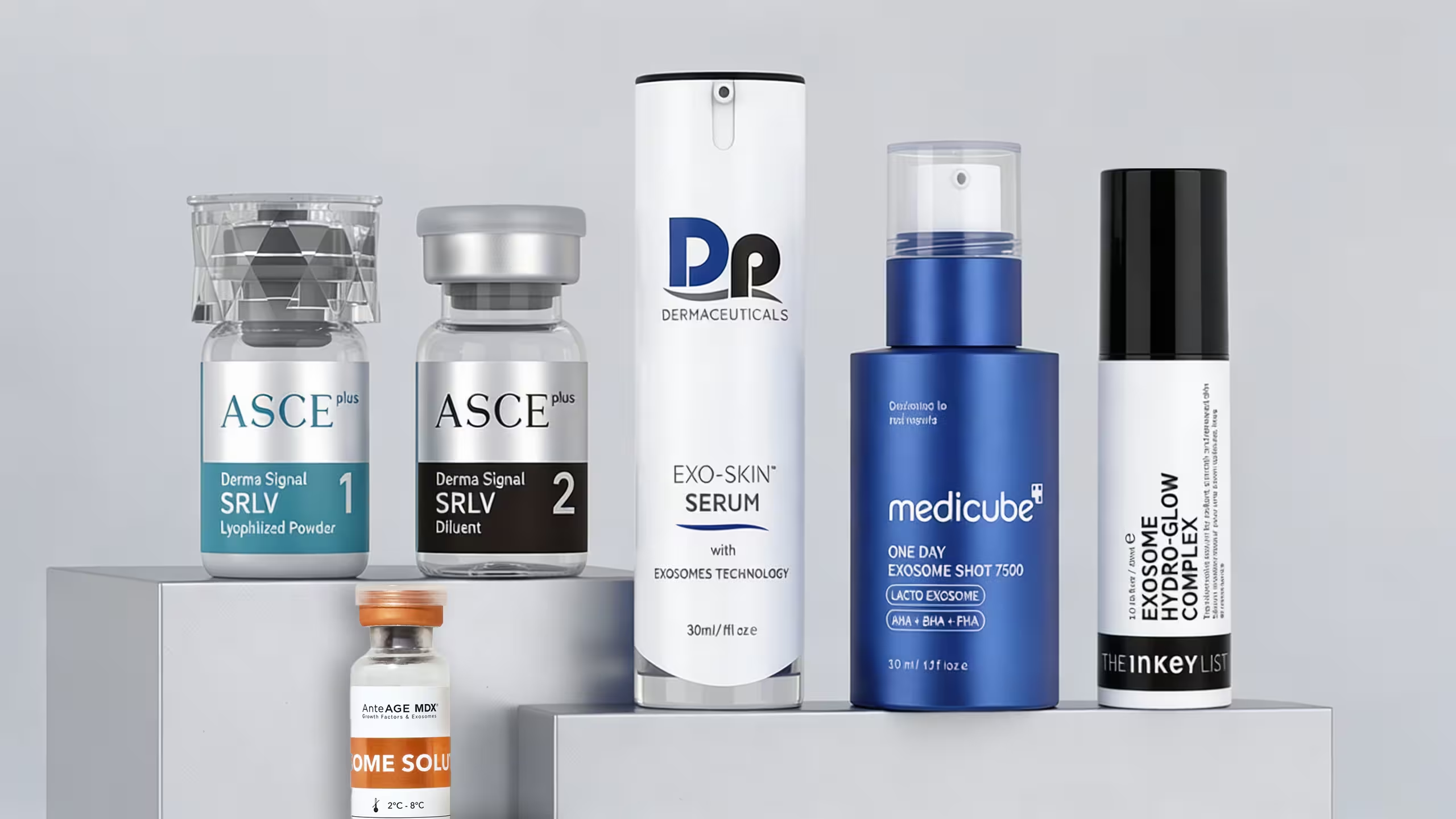
We picked five: two budget serums (~€19), one premium serum (~€150), and two clinic treatments. For each one, we checked the full ingredient list against the manufacturer's own sources, and asked three simple questions: Does it actually contain exosomes? What's really doing the work? And is the price fair?
One thing to keep in mind as you read: not all "exosomes" are the same. Some products use plant-derived vesicles (from roses or centella), others use human stem cell exosomes, and one even uses salmon. These come from completely different organisms and carry completely different biological cargo. The clinical research that makes exosomes sound exciting? Almost all of it was done with human stem cell exosomes in lab settings — not with plant extracts in a serum bottle. Calling them all "exosomes" is like calling a bicycle and an airplane "vehicles" and expecting them both to get you to Tokyo.
TOPICAL SERUMS
1. The INKEY List — Exosome Hydro-Glow Complex (~€17–20)
Full ingredients:Aqua (Water/Eau), Caprylic/Capric Triglyceride, Dipropylene Glycol, Glycerin, Propanediol, Coconut Alkanes, Sodium Acrylates Copolymer, Dimethicone, Ectoin, Phenoxyethanol, Cetearyl Olivate, Sorbitan Olivate, Allantoin, Hydrolyzed Sodium Hyaluronate, Sodium Hyaluronate, Butylene Glycol, Lecithin, Ubiquinone, Coco-Caprylate/Caprate, Ethylhexylglycerin, Sodium Phytate, Pentylene Glycol, Hydrolyzed Opuntia Ficus-Indica Flower Extract, Centella Asiatica Leaf Extract, Dextran, Tripeptide-1
Exosome source claimed by brand: Centella Asiatica ("1% Cica Exosome," "3 million plant-derived exosomes")Exosomes in INCI: None. No ingredient is named as an exosome or extracellular vesicle. No characterization data published.
Sources: Official product page · Sephora · INCIDecoder
Our take: Forget the exosome marketing — this is a perfectly good hydrating serum at a fair price. Two forms of hyaluronic acid give you multi-layer hydration. Ectoin protects and repairs the skin barrier (with actual clinical data behind it). Allantoin and centella soothe. CoQ10 adds antioxidant support. Tripeptide-1 helps with collagen signaling. At ~€17, you're paying what a well-formulated moisturizing serum should cost. The "exosome" is a label, not an ingredient.
2. Medicube — Zero Exosome Shot 7500 (~€19)
Full ingredients:Water, Dipropylene Glycol, Glycerin, Butylene Glycol, 1,2-Hexanediol, Niacinamide, Sodium Polyacrylate, Ethylhexyl Palmitate, Hydrolyzed Sponge, C12-14 Alketh-12, Hydrogenated Polydecene, Ethylhexylglycerin, Adenosine, Caprylyl/Capryl Glucoside, Disodium EDTA, Panthenol, Calcium Silicate, Lactobacillus Extracellular Vesicles, Campsis Grandiflora Flower Extract, Pueraria Lobata Root Extract, Pinus Palustris Leaf Extract, Oenothera Biennis (Evening Primrose) Flower Extract, Ulmus Davidiana Root Extract, Sodium Silicate, Betaine Salicylate, Citric Acid, Gluconolactone
Exosome source: Lactobacillus Extracellular Vesicles (bacterial-derived). Brand markets as "15M patented Exosome shots" and "patented Lacto Exosome."Exosomes in INCI: Honestly listed as "Extracellular Vesicles" — not "exosomes." Bacterial EVs are biologically distinct from human MSC exosomes.
Sources: Official Medicube page · Ulta · INCIDecoder
Our take: The most interesting thing about this product isn't the exosomes — it's the sponge. Hydrolyzed Sponge contains tiny marine spicules that act like micro-needles, physically creating micro-channels in your skin. That tingling you feel? That's the spicules, not the exosomes. Beyond that, niacinamide is one of the most proven actives in skincare, panthenol hydrates, adenosine helps with wrinkles, and you get a gentle acid trio (BHA + citric acid + gluconolactone) for exfoliation. At ~€19, it's a clever product — the spicule delivery system is genuinely smart. And Medicube deserves credit for being the only brand in this teardown that honestly labels its vesicle component as "Extracellular Vesicles" in the INCI instead of calling them exosomes.
PREMIUM TOPICAL SERUM
3. DP Derm — EXO-SKIN Serum (~€150–165)
Full ingredients (from manufacturer — note: INCIDecoder listing is outdated):Aqua/Water/Eau, Polygonum Multiflorum Root Water, Human Amniotic Fluid Mesenchymal Stem Cell/Trophoblast Cell Exosomes, Sodium Hyaluronate, Butylene Glycol, Ascorbyl Glucoside, Magnesium Ascorbyl Phosphate, Sodium Ascorbyl Phosphate, Tetrahexyldecyl Ascorbate, Hydrogenated Lecithin, 1,2-Hexanediol, Cetearyl Alcohol, Panthenol, Niacinamide, Stearic Acid, Ascorbic Acid, Salmon Testis Exosomes, Illicium Verum (Anise) Fruit Extract, Ethylhexylglycerin, Camellia Sinensis Leaf Extract, Cetearyl Olivate, Sorbitan Olivate, Phenoxyethanol, Scutellaria Baicalensis Root Extract, Ceramide NP, Centella Asiatica Callus, Polygonum Multiflorum Root Extract, Sodium DNA, Lysine, Copper Tripeptide-1, Pentylene Glycol, Ceramide NS, Glycine, Serine, Glutamic Acid, Acetyl Hexapeptide-8, Acetyl Octapeptide-3, Aluminum Chloride, Magnesium Chloride, Potassium Chloride, Ceramide AP, Ceramide AS, Gluconolactone, Aspartic Acid, Leucine, Alanine, Arginine, Tyrosine, Phenylalanine, Proline, Threonine, Valine, Isoleucine, Histidine, Tryptophan, Methionine, Cysteine
Exosome sources: Human Amniotic Fluid MSC/Trophoblast Cell Exosomes (position 3 — high concentration) + Salmon Testis Exosomes (position 17). Human + animal dual-exosome product.Sourcing inconsistency: Brand's technology page describes sourcing from "MSCs of human umbilical cord." Product INCI says "Human Amniotic Fluid." These are different tissue sources. Not explained on the brand's website.
Sources: Official DP Derm product page · DP Derm exosome technology · DermapenWorld⚠️ INCIDecoder listing shows an outdated formulation — official dpderm.com is authoritative.
Our take: Strip away the exosome story and this is still an impressive serum. Five forms of vitamin C for antioxidant coverage. Four ceramides (NP, NS, AP, AS) to rebuild your skin barrier. Copper Tripeptide-1 (GHK-Cu) for wound healing and collagen. Sodium DNA (PDRN) for tissue repair. Niacinamide, panthenol, centella, green tea. That ingredient list justifies a premium price — you'd pay €80–100 for those actives alone in a well-formulated product.
The jump to €150+ comes from the human-derived exosomes. And here's what you need to know:
Source claimed by the brand: human umbilical cord MSC exosomes.Regulatory status in the EU: not approved / not authorized for cosmetic aesthetic use.Regulatory status in the US: no FDA-approved exosome products exist for any indication.
This does not judge the formulation quality or the efficacy of the other ingredients — it is a regulatory fact, not an opinion.
CLINIC PRODUCTS (used with microneedling / device treatments)
4. ASCE+ Derma Signal Kit SRLV (ExoCoBio) — plant-derived
This is the product used by many European clinics offering exosome treatments alongside microneedling or radiofrequency devices.
Vial 1 — Lyophilized Powder:Active ingredients (per FDA filing): Leucine 0.05%, Isoleucine 0.05%Inactive ingredients: Rosa Damascena Callus Extracellular Vesicles, Methionine, Trehalose, Mannitol, Glutamine, Potassium Chloride, Ascorbic Acid, Retinol, Magnesium Sulfate, Glutathione, Nicotinamide Adenine Dinucleotide (NAD+), Disodium Flavine Adenine Dinucleotide (FAD), Thiamine Diphosphate, Coenzyme A, sh-Oligopeptide-2, Acetyl Hexapeptide-8, Nonapeptide-1, Palmitoyl Tetrapeptide-7, Palmitoyl Tripeptide-1, sh-Oligopeptide-1, sh-Polypeptide-1, sh-Polypeptide-3, sh-Polypeptide-76, Copper Tripeptide-1, Palmitoyl Pentapeptide-4, Alanine, Arginine, Aspartic Acid, Glutamic Acid, Glycine, Histidine, Lysine HCL, Ornithine HCL, Phenylalanine, Proline, Serine, Threonine, Tryptophan, Tyrosine, Valine
Vial 2 — Diluent: Water, Sodium Chloride, Sodium Hyaluronate, Disodium Phosphate, Sodium Phosphate, Potassium Chloride, + amino acids
Exosome source: Rosa Damascena Callus Extracellular Vesicles — plant-derived (rose stem cell EVs), registered as INCI with PCPC in 2020. ExoCoBio claims 5 billion per vial via proprietary ExoSCRT™ process. Plant EVs are biologically distinct from human MSC exosomes. Classified as an inactive ingredient in the FDA filing.
Sources: DailyMed/NLM FDA label · fda.report · Venn Aesthetics · ExoCoBio PCPC registration · INCIDecoder EV definition
Our take: There's more going on in this vial than most clinic patients realize — and most of it isn't exosomes. You're getting metabolic cofactors (NAD+, FAD, coenzyme A), retinol, vitamin C, glutathione, copper peptide, hyaluronic acid, and a set of recombinant human growth factor analogs (the "sh-" prefix peptides — sh-Oligopeptide-1 is an EGF analog, sh-Oligopeptide-2 is an IGF-1 analog, and so on). No concentrations are disclosed beyond the amino acid actives. When this cocktail is applied after microneedling, the breached skin barrier allows deeper delivery — but you can't attribute your results to the exosomes specifically. The microneedling alone stimulates collagen. The growth factors and peptides have their own effects. The exosome component is one piece of a complex puzzle, and nobody can tell you which piece is doing what.
The FDA DailyMed filing classifies ASCE+ as "unapproved drug other" with the disclaimer: "This drug has not been found by FDA to be safe and effective." Being plant-derived, it avoids the EU ATMP classification that applies to human-derived exosome products — which is likely why many European clinics prefer it.
5. AnteAGE MDX — Exosome Solution — human-derived
Exosome Vial: Phosphate Buffered Saline, Human Bone Marrow Stem Cell Exosomes, Human Umbilical Cord Stem Cell Exosomes, Trehalose
Diluent Vial: Water (Aqua), Hyaluronic Acid, Dehydroacetic Acid, Benzyl Alcohol
Exosome source: Human-derived — bone marrow MSCs + umbilical cord MSCs. 10 billion exosomes per vial claimed. Manufactured in GMP-certified lab, Irvine, California.
Sources: Official AnteAGE product page · AnteAGE Exosome FAQ
Our take: AnteAGE MDX is the most transparent product in this teardown — and the closest to what exosome research is actually about. Four ingredients in the exosome vial, clearly identified. Human MSC-derived exosomes carrying growth factors and cytokines, delivered through skin opened by microneedling or laser. It's the real thing — or at least the closest thing to what the science describes.
But "real" doesn't mean "approved."
Source: human bone marrow + umbilical cord MSC exosomes.Regulatory status in the US: no FDA-approved exosome products exist for any indication. Products making structure or function claims require approval as biological products under Section 351 of the Public Health Service Act.Regulatory status in the EU: human-derived exosome products may fall under ATMP regulation (1394/2007) depending on claims and intended use. No EMA authorization exists for aesthetic exosome use.
This does not judge the product's biological rationale or manufacturing quality — it is a regulatory fact, not an opinion.
AnteAGE also offers a plant-based "Biosome" line for markets where human-derived products face additional regulatory scrutiny. If your clinic uses AnteAGE MDX, ask directly: is this product authorized for aesthetic use in our country?
What the five products tell us
At the budget end (~€19), you're paying for the word. INKEY List has no identifiable exosomes in its INCI at all. Medicube has honestly-labeled bacterial EVs, but the sponge spicules and niacinamide are what's really working.
At the premium end (~€150), DP Derm offers a genuinely strong formulation — five vitamin Cs, four ceramides, copper peptide, PDRN — with human + animal exosomes that raise regulatory questions.
At the clinic level, you're either receiving plant-derived EVs (ASCE+) with no proven equivalence to the human exosomes cited in research, or an unauthorized human biological product (AnteAGE MDX).
In every case, the proven ingredients — hyaluronic acid, niacinamide, vitamin C, ceramides, peptides, retinol — are doing the heavy lifting.
The biology of extracellular vesicles remains genuinely fascinating. But between that biology and your bathroom shelf — or your clinic treatment bed — the gap hasn't closed.
Ask your provider. Read the INCI. Follow the evidence.