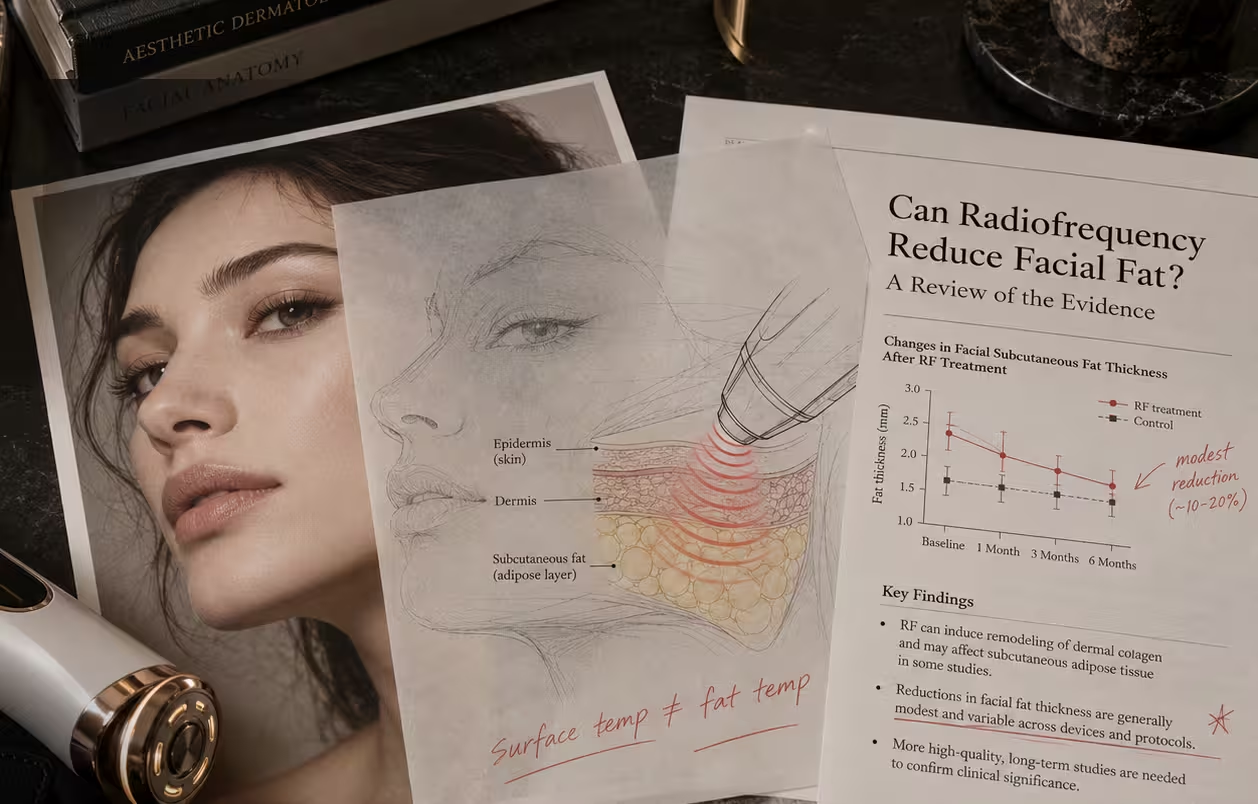


Home RF: What the Research Actually Supports
Partner Feature
No time to read — key facts
Key facts from this article
The Biology
- Radiofrequency devices deliver electromagnetic energy that converts to heat in skin tissue
- When dermal tissue reaches 40–48°C, collagen fibres partially denature and contract — producing immediate mild tightening
- The more significant effect is delayed: controlled thermal injury triggers a wound-healing response, activating fibroblasts and stimulating new collagen synthesis (neocollagenesis)
- This process peaks 2–6 months post-treatment and is well-documented histologically — increased type I and type III collagen confirmed via biopsy studies
- RF has been used in dermatology since 2002 (FDA clearance of Thermage); the mechanism is established, not speculative
Clinical vs. Home Devices
- Professional RF devices (monopolar) penetrate up to 20mm, reaching subcutaneous tissue — powerful, painful, expensive (€300–800/session)
- Home devices use bipolar/multipolar configurations, limiting penetration to 1–4mm — a deliberate safety trade-off for unsupervised use
- Home devices work through cumulative effect over 8–12 weeks, not dramatic single-session results
- The 2022 systematic review in Archives of Dermatological Research gave home RF devices a Grade B recommendation for wrinkles — "reasonable evidence supports efficacy"
The Evidence for Home Devices
- 37 clinical trials reviewed across all home dermatological devices; RF specifically supported by 1 level 1b study + 6 level 2b studies
- Shu et al. (2022): Randomised split-face trial, 33 women, 12 weeks — RF side showed statistically significant improvements in wrinkles, radiance, and skin thickness vs. anti-aging cosmetic (p<0.05)
- Gold et al. (2017): 33 subjects, 6 weeks — blinded assessment found 1.49-point reduction on Fitzpatrick Wrinkle Scale (p<0.001)
- Most studies have some manufacturer involvement (devices provided, publication fees); this is common in cosmetic device research
- No studies validate the cheapest (<€100) consumer devices — evidence exists for devices in the €200–400 range
What Matters in a Device
- Temperature control: 40–43°C is the therapeutic window; devices without temperature monitoring rely on user guesswork
- Frequency: ~1 MHz is standard for effective dermal heating
- Power density: Cheap devices may technically be "RF" but lack adequate power to reach therapeutic threshold
- Consistency: Results require committed protocols — typically 8–12 weeks of regular use
CurrentBody Skin RF Specifics
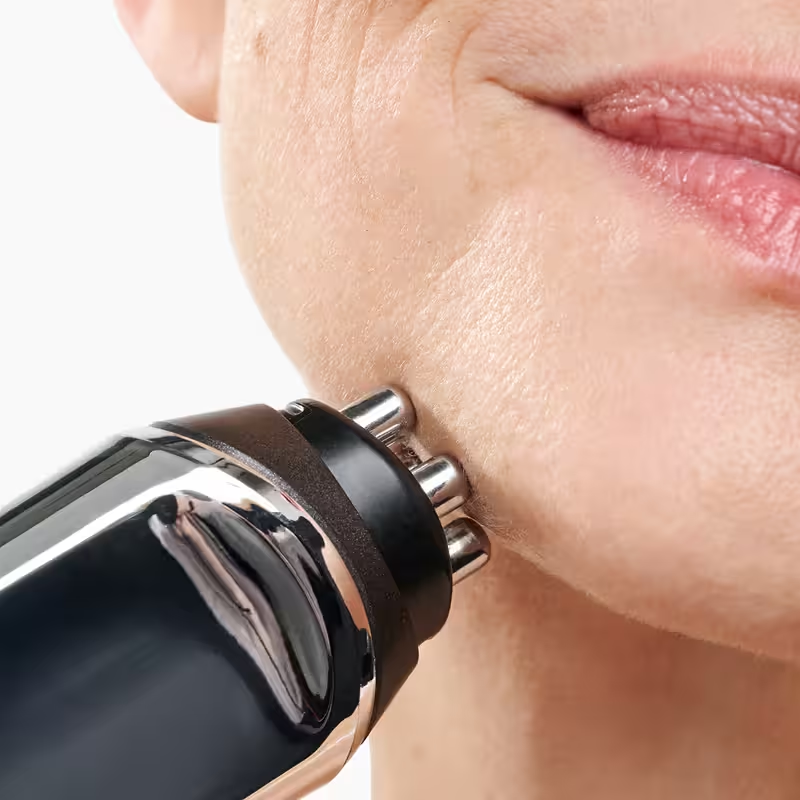
- 1 MHz frequency, bipolar configuration (4 electrodes, 2 pairs), 5W output
- Dual redundant thermistors maintain 40,5 ± 0,5 °C according FDA — slightly below research threshold, likely a safety margin
- FDA cleared (510(k) K232424, March 2024) for mild to moderate facial wrinkles, Fitzpatrick I-IV
- Protocol: once weekly for 8 weeks, then maintenance every 4–8 weeks
- Price: €349 — roughly equivalent to one professional RF session
Safety
- Across all studies, adverse events are minimal: transient redness, mild warmth
- All home RF devices reviewed had "favorable safety profiles with few significant adverse events"
- One device line (Stop Eye by Initial Pufbrand) was recalled for burn risk due to inadequate temperature control — underscoring why temperature monitoring matters
The Honest Summary
- Home RF is one of the few device categories where independent systematic review actually supports the marketing claims
- Results are real but modest — maintenance tool, not miracle worker
- Requires patience (8+ weeks) and consistency
- CurrentBody's device gets the technical fundamentals right; it works if you use it properly
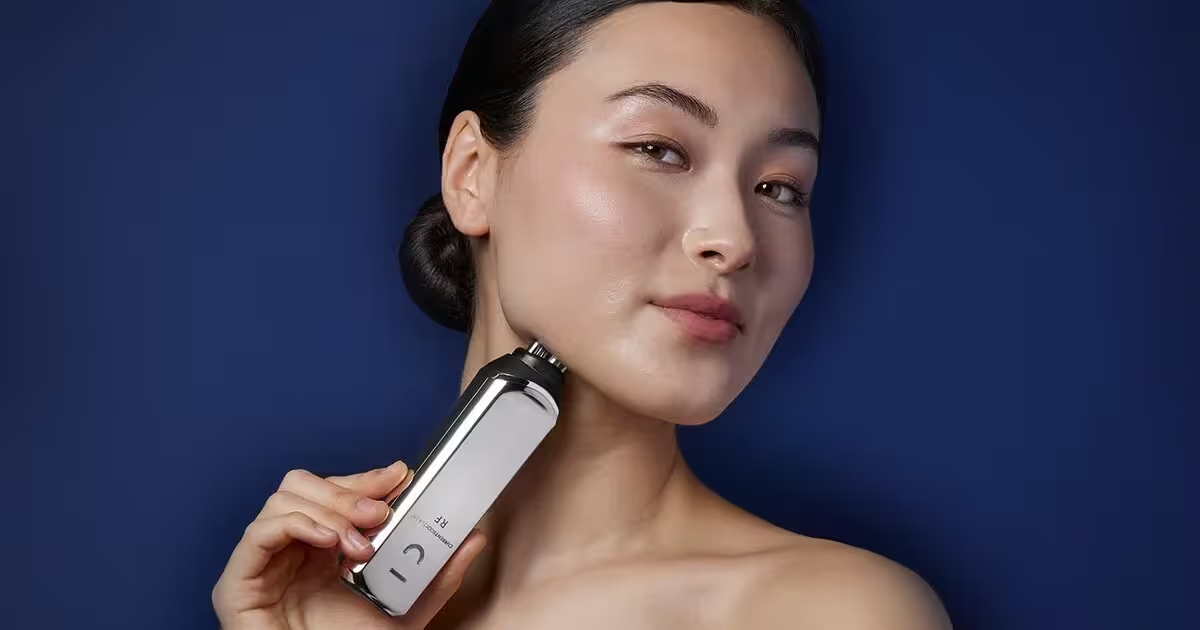



Evidence vs Marketing. Do Home RF Devices Really Work? What Clinical Studies Show
There's a particular category of skincare device that sits in an interesting position: backed by real science, but often marketed in ways that make it hard to separate substance from hype.
Radiofrequency skin tightening is one of those. The technology has decades of clinical research behind it. Dermatologists use RF devices regularly. The biology is well understood. And yet, the home device market is full of vague promises about "collagen stimulation" without much explanation of what that actually means — or whether the device you're holding can deliver it.
So let's look at what the research actually shows. What does RF do to skin? Do home devices work? And if so, what should you realistically expect?
The biology: Why RF can tighten skin
Radiofrequency isn't new or mysterious. It's been used in dermatology since 2002, when the FDA cleared the first RF device (Thermage) for facial wrinkles. The mechanism is well documented.
RF devices deliver electromagnetic energy that converts to heat in your skin. This matters because collagen — the protein responsible for skin firmness — responds to controlled thermal injury in predictable ways.
When dermal tissue reaches approximately 40–48°C, collagen fibres begin to denature. Their triple-helix structure partially unwinds, causing immediate contraction. You get a subtle tightening effect right away.
But the more significant effect happens over weeks. The controlled thermal injury triggers a wound-healing response: fibroblasts activate, new collagen synthesis begins (neocollagenesis), and the dermal matrix gradually remodels. Studies show this process peaks around 2–6 months post-treatment.
A 2011 study published in the Journal of the American Academy of Dermatology demonstrated this histologically: six sessions of monopolar RF over three months resulted in 70–75% improvement in skin tightening, with increases in both type I and type III collagen confirmed via biopsy. More recent work — including a 2025 paper in Lasers in Surgery and Medicine — has further clarified that RF-induced neocollagenesis involves both immediate collagen fibre contraction and longer-term fibroblast activation.
The science here is solid. RF does what it claims to do at the cellular level.
The clinical vs. home device gap
Here's where it gets more nuanced.
Professional RF devices — the kind you'd encounter in a dermatology clinic — are powerful. Monopolar systems can penetrate up to 20mm, reaching deep into the subcutaneous tissue. They deliver high energy with sophisticated cooling systems to protect the epidermis while heating the deeper dermis. They hurt, they're expensive (typically €300–800 per session), and they produce noticeable results relatively quickly.
Home devices operate differently. They use bipolar or multipolar configurations, which limit penetration depth to approximately 1–4mm. This is a deliberate safety trade-off: shallower penetration means less risk of burns, less discomfort, and no need for professional supervision. But it also means the effect is gentler.
A 2026 systematic review in Health Science Reports put it plainly: "Bipolar RF offers localized treatment with reduced penetration depth (1–4 mm), enabling safer home-use applications."
This isn't a flaw — it's appropriate engineering for unsupervised use. But it means home devices work through cumulative effect rather than dramatic single-session results. You're building collagen gradually, over weeks, with consistent use.
What the home device research shows
The most useful independent assessment comes from a 2022 systematic review published in Archives of Dermatological Research by researchers at SUNY Downstate Medical Center. They evaluated all home-use dermatological devices — IPL, LED, laser, RF — across 37 clinical trials.
Their conclusion for home RF devices: Grade B recommendation for treating rhytides (wrinkles). That's based on one level 1b study and six level 2b studies, with consistent findings across different devices and populations. They noted "favorable safety profiles with few significant adverse events."
Grade B isn't the highest possible rating, but it's meaningful. It means: reasonable evidence supports efficacy; recommend with some confidence.
Individual trials reinforce this:
Shu et al. (2022) conducted a randomised split-face trial at West China Hospital, Sichuan University. Thirty-three women aged 35–60 used a home RF device on one side of their face and an anti-aging cosmetic on the other for 12 weeks. The RF side showed statistically significant improvements in wrinkles, skin radiance, colour, and thickness (p<0.05). The device heated skin to 43°C — the same target temperature as professional protocols.
Gold et al. (2017) evaluated a home RF/LED combination device for periorbital wrinkles in 33 subjects over six weeks. Blinded assessment by three independent dermatologists found an average reduction of 1.49 points on the Fitzpatrick Wrinkle Scale (p<0.001).
Sadick & Harth (2014) tested a multisource RF home device in 45 subjects over 12 weeks. Results showed significant improvements in wrinkles, skin elasticity, firmness, and collagen content — measured both clinically and instrumentally.
Are these studies perfect? No. Sample sizes are modest. Several have manufacturer involvement (devices provided, publication fees supported). This is common in cosmetic device research and worth noting. But the methodology is generally sound — randomised designs, blinded assessors, objective measurements alongside subjective evaluation.
The pattern across studies is consistent: home RF devices produce real, measurable improvements in skin texture and firmness when used regularly over 8–12 weeks. Effects are more modest than clinical treatment, but they're present.
What matters in a home RF device
Not all home RF devices are equivalent. Based on the literature, several technical factors appear to matter:
Temperature control. The research identifies 40–43°C as the therapeutic window for collagen remodelling — warm enough to trigger the biological response, cool enough to avoid tissue damage. This is a narrow range, and skin temperature sensation varies between individuals and facial areas. Many home RF devices lack temperature feedback entirely, relying on the user's perception of warmth to gauge effectiveness. Devices that actively monitor skin temperature and adjust output accordingly can maintain the therapeutic window more consistently — which is why temperature sensing appears in the better-designed units. The CurrentBody device, for example, uses dual redundant thermistors and caps output at 40.5 ± 0.50°C according to its FDA documentation.
Frequency. Most effective RF devices operate around 1 MHz. This frequency achieves appropriate tissue penetration for dermal heating.
Electrode configuration. Bipolar and multipolar configurations are standard for home use — safer than monopolar, though shallower in penetration. The trade-off is appropriate.
Consistency of use. Perhaps the most important factor isn't technical at all. Home devices require regular use — typically 2–5 times per week during the initial phase, then maintenance sessions. The studies showing positive results all involved committed protocols over 8–12 weeks.
Build quality and power output. This is where price differences matter. A €70 device from Amazon may technically be "radiofrequency," but without adequate power density, proper electrode design, or temperature monitoring, it may simply warm your skin without reaching the thermal threshold needed for collagen response. The studies cited above used devices in the €200–400 range with documented specifications. There's no research I'm aware of validating the cheapest consumer devices — which doesn't mean they can't work, but it does mean you're buying on faith rather than evidence.
CurrentBody Skin RF: The specifics
The device operates at 1 MHz with a bipolar electrode configuration — four electrodes arranged as two bipolar pairs, delivering approximately 5W of power. According to the FDA 510(k) clearance documentation, it uses two redundant thermistors to continuously monitor skin temperature and automatically adjust output to maintain a maximum of 40.5 ± 0.50°C. This is slightly below the 43°C threshold often cited in research, which may reflect a deliberate safety margin for unsupervised home use — keeping the device firmly in the "stimulation without damage" zone.
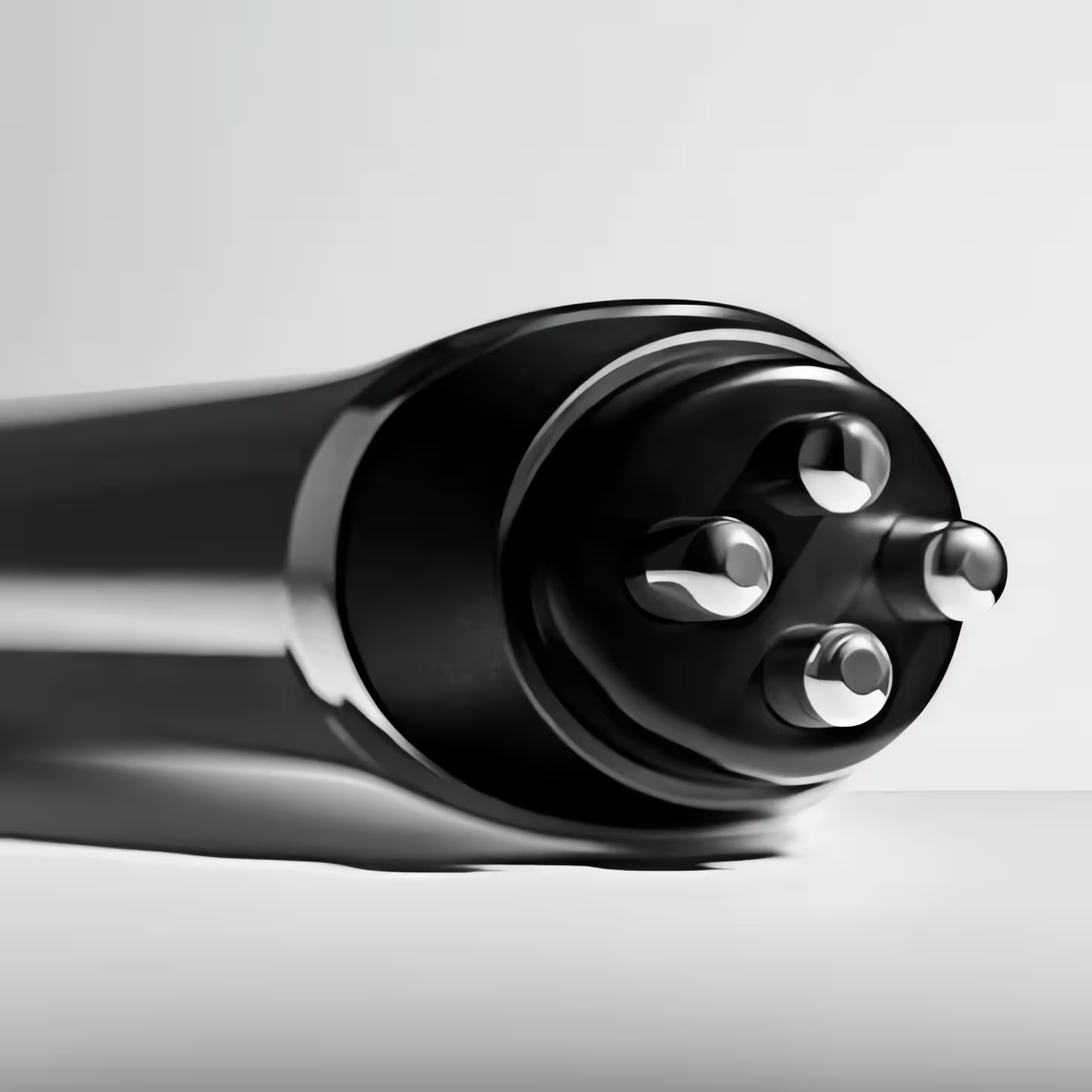
Three energy levels let you adjust how quickly the device reaches therapeutic temperature. The device signals (via light indicator) when to move to the next treatment area after five minutes.
The protocol: CurrentBody recommends once weekly for 8 weeks as the initial course, then maintenance sessions every 4–8 weeks thereafter. A full-face treatment takes about 20–30 minutes if you're thorough about coverage.
In practice, splitting the treatment across multiple days can make the protocol easier to integrate into a routine. One practical approach is to divide the face across multiple sessions — for example treating the forehead, mid-face and jawline on separate days — keeping each session shorter while maintaining the recommended weekly frequency for each zone. This keeps each session to around 10 minutes while maintaining the weekly frequency for each zone. After completing the initial 8 weeks, many users move to periodic maintenance sessions every 5–6 weeks.
Practically speaking: there's a learning curve. The device requires a conductive gel (included), and you need to keep it moving — not too fast, not too slow. The warmth is noticeable but comfortable. Mild transient redness may occur immediately after treatment and typically resolves within 30–60 minutes.
After the initial 8-week protocol, improvements in skin firmness can become noticeable — particularly along the jawline and in the mid-face area. The effect is not a dramatic transformation; home RF does not replicate surgical or clinical results. But measurable improvements in texture and tautness can persist with maintenance sessions. This aligns with what the studies suggest: cumulative, modest, real.
The device is FDA cleared (510(k) K232424, March 2024) for "non-invasive treatment of mild to moderate facial wrinkles" in Fitzpatrick skin types I–IV. FDA clearance requires demonstration of substantial equivalence to a predicate device — in this case, the Pollogen STOP U — including safety testing, electrical compliance, and human factors validation. It's not the same as FDA approval (which requires clinical efficacy data), but it does confirm the device meets regulatory safety standards for home use.
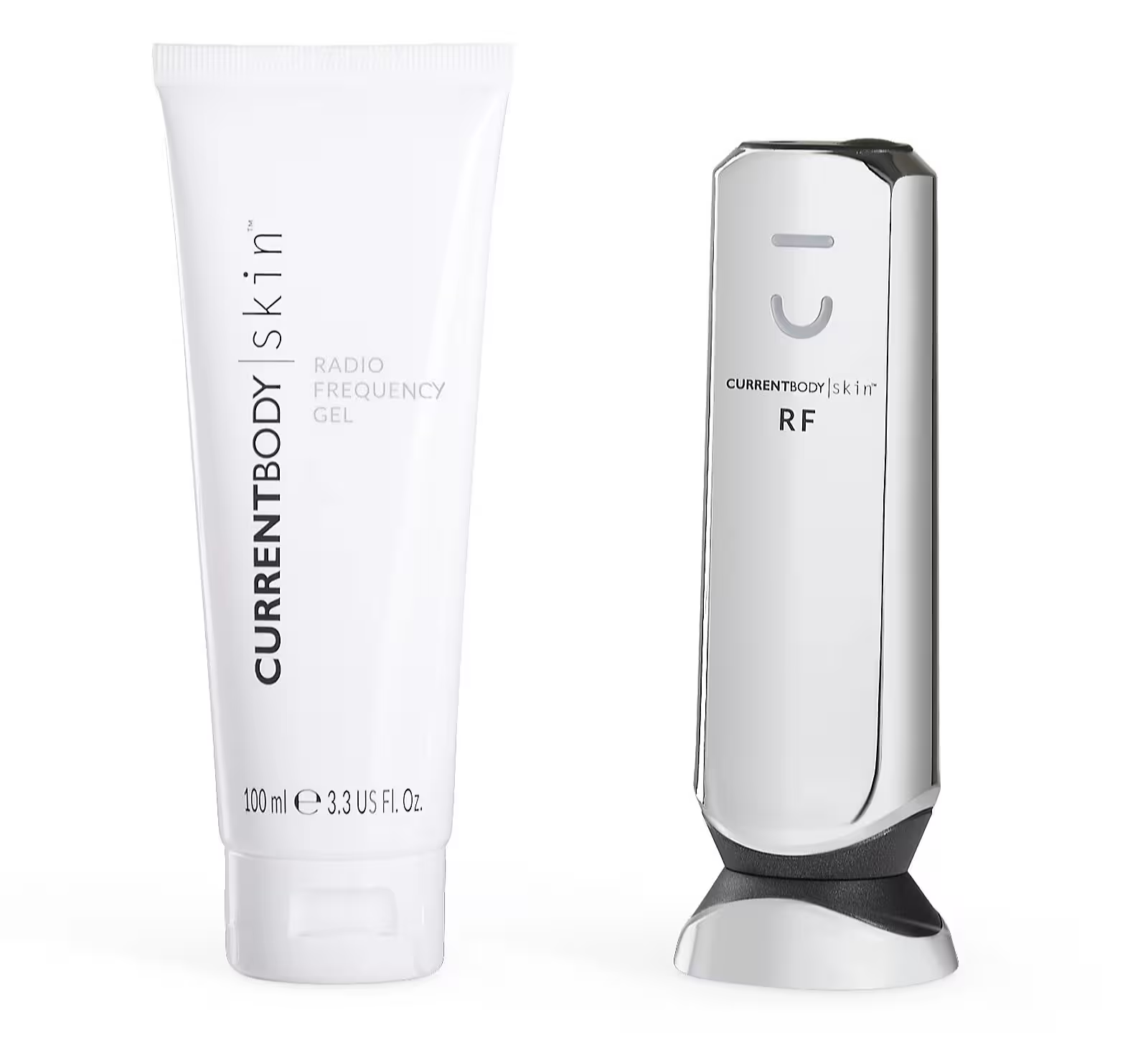
CurrentBody claims 89% of users saw improvement in skin tightness in their own 8-week trial. That study does not appear to be published independently, so the published literature likely provides a more reliable reference point — although the claim itself is broadly consistent with findings from independent research on home RF devices.
At €349, it's positioned at the higher end of home RF devices. The math works out to roughly the cost of a single professional RF session for a device you can use repeatedly. Whether that value proposition makes sense depends on expectations and commitment to consistent use.
Who should avoid RF devices
RF is not suitable for everyone. Contraindications include: pregnancy, pacemakers or implanted electronic devices, metal implants in the treatment area, active skin conditions (eczema, psoriasis, rosacea flare-ups, active acne), open wounds or infections, and recent injectable treatments (wait 2–4 weeks post-filler or botox). Those with a history of keloid scarring should proceed with caution.
Possible side effects are generally mild and transient: temporary redness, warmth, and occasional minor swelling — typically resolving within an hour. More serious complications like burns are rare with properly designed devices but have occurred with units lacking adequate temperature control (one device line was recalled for this reason). If you have any underlying health conditions or concerns, consult a dermatologist before starting.
The honest summary
Home RF devices occupy a genuine middle ground: more effective than topical skincare for skin tightening, less dramatic than professional treatment, and backed by a reasonable — if not overwhelming — body of evidence.
They're not magic. They won't replace a facelift or replicate clinical RF results. They require patience and consistency.
But the underlying science is sound. The mechanism is established. Independent systematic review supports their use. And the safety profile is excellent.
If you're looking for a non-invasive approach to maintaining skin firmness — something you can do yourself, at home, without the cost and commitment of regular clinic visits — home RF is one of the few device categories where the evidence actually supports the marketing.
CurrentBody's device gets the technical fundamentals right: appropriate frequency, proper temperature targeting, and solid build quality. Used consistently, it can produce measurable improvements — as long as expectations remain realistic about what ‘works’ means in this context.
That's not hype. It's just the research, honestly presented.
Interested in evidence-based partnership content like this for your brand? Learn how iGlowly works with partners here.
iGlowly only collaborates with brands whose products we have personally tested and/or consider relevant to our editorial focus. Partnership articles remain subject to full editorial control, and our standards — evidence-first and transparently sourced — apply equally to all collaborations.
Sources
- Cohen M, Austin E, Masub N, Kurtti A, George C, Jagdeo J. Home-based devices in dermatology: a systematic review of safety and efficacy. Arch Dermatol Res. 2022;314(3):239-246. doi:10.1007/s00403-021-02231-0
- Shu X, Wan R, Huo W, et al. Effectiveness of a Radiofrequency Device for Rejuvenation of Aged Skin at Home: A Randomized Split-Face Clinical Trial. Dermatol Ther (Heidelb). 2022;12(4):871-883. doi:10.1007/s13555-022-00697-y
- Sadick N, Harth Y. A 12-week clinical and instrumental study evaluating the efficacy of a multisource radiofrequency home-use device for wrinkle reduction and improvement in skin tone, skin elasticity, and dermal collagen content. J Cosmet Dermatol. 2014;13(2):122-127.
- Gold MH, Biron J, Levi L, Sensing W. Safety, efficacy, and usage compliance of home-use device utilizing RF and light energies for treating periorbital wrinkles. J Cosmet Dermatol. 2017;16(1):95-102. doi:10.1111/jocd.12299
- Zhang Y, et al. The Landscape of Radiofrequency Technology for Skin Rejuvenation. Health Sci Rep. 2026;9(1):e71575. doi:10.1002/hsr2.71575
- Kilmer SL, et al. Monopolar Radiofrequency for Dermal Prejuvenation: Scientific Rationale and Mechanisms of Action. Lasers Surg Med. 2025. doi:10.1002/lsm.70087
- El-Domyati M, El-Ammawi TS, Medhat W, et al. Radiofrequency facial rejuvenation: Evidence-based effect. J Am Acad Dermatol. 2011;64(3):524-535. doi:10.1016/j.jaad.2010.06.045
- Zelickson BD, Kist D, Bernstein E, et al. Histological and ultrastructural evaluation of the effects of a radiofrequency-based nonablative dermal remodeling device: a pilot study. Arch Dermatol. 2004;140(2):204-209. doi:10.1001/archderm.140.2.204
- Bu P, Duan R, Luo J, Yang T, Liu N, Wen C. Development of Home Beauty Devices for Facial Rejuvenation: Establishment of Efficacy Evaluation System. Clin Cosmet Investig Dermatol. 2024;17:553-563. doi:10.2147/CCID.S449599
- Austin GK, Struble SL, Quatela VC. Evaluating the Effectiveness and Safety of Radiofrequency for Face and Neck Rejuvenation: A Systematic Review. Lasers Surg Med. 2022;54(1):27-45. doi:10.1002/lsm.23506